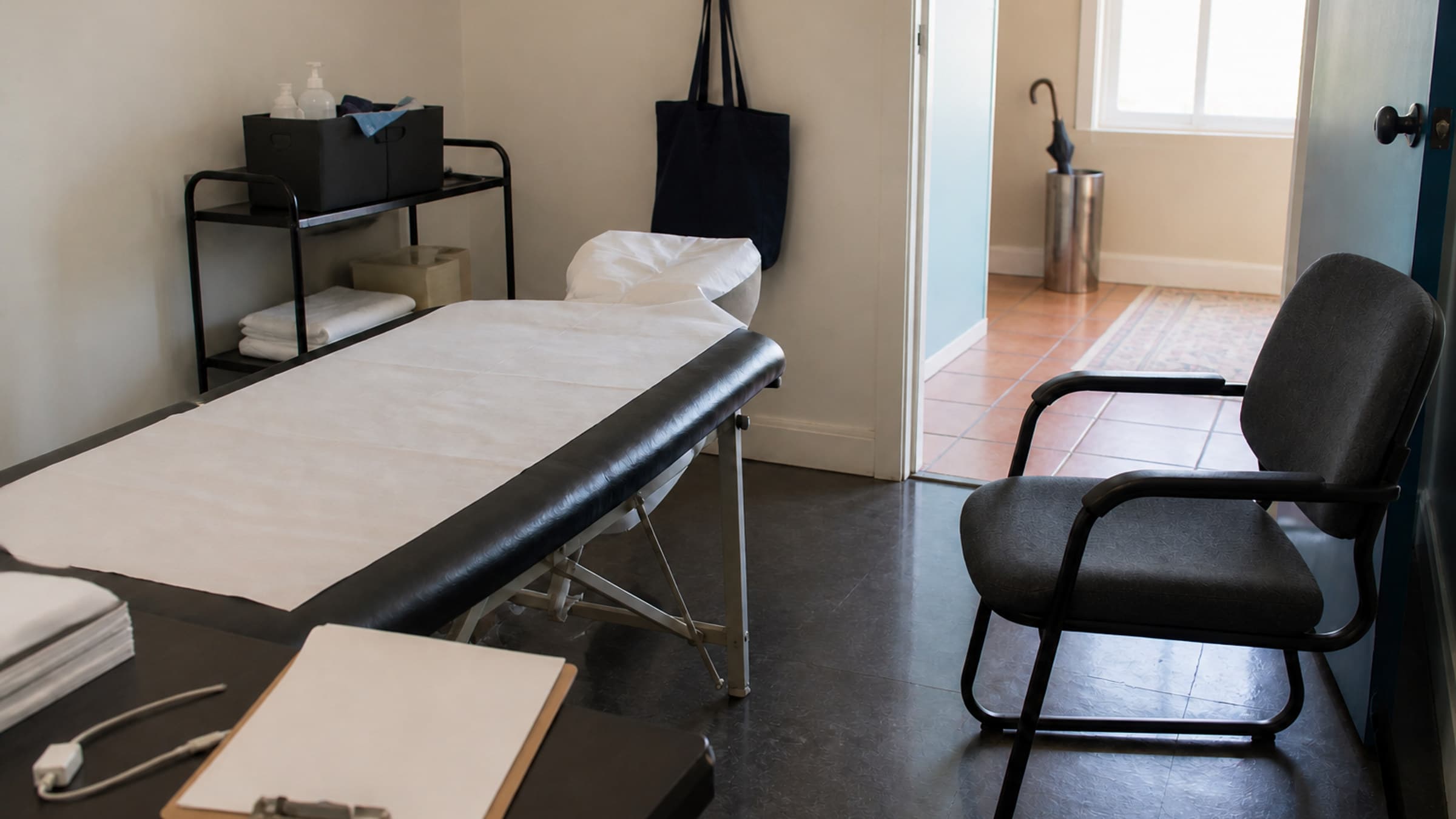

Design a cancellation policy for the physiotherapy context
Physiotherapy presents unique policy considerations. Your patients typically need a series of visits, so a single missed appointment disrupts not just your schedule but their treatment progression. Many patients are referred by physicians or insurers, which adds a layer of accountability. And some patients are dealing with acute pain that genuinely fluctuates day to day.
Your cancellation policy should balance firmness with empathy. A 24-hour notice requirement is the industry standard and is reasonable for most physiotherapy practices. Make clear what happens when the policy is not followed: a cancellation fee, a note in the patient record, or both.
Be specific about the fee amount. Charging a flat rate, typically 50 to 100 percent of the session fee, is more effective than a vague warning about "possible charges." Patients take a concrete number more seriously than an ambiguous threat. Decide in advance whether you will enforce the fee consistently or allow a one-time waiver for new patients. Whatever you decide, apply it uniformly.
For insurance-funded patients, check whether your contracts allow cancellation fees. Some insurers prohibit charging patients for missed visits, which means you need alternative accountability mechanisms for that portion of your caseload.
Communicate the policy before it matters
The worst time to introduce your cancellation policy is the moment a patient violates it. Present the policy clearly at intake, include it in your new patient forms, and have the patient acknowledge it in writing before their first appointment. If you use digital intake forms, make the cancellation policy a required acknowledgment step.
Reinforce the policy in your appointment confirmation messages. A confirmation that says "Your appointment is tomorrow at 2pm. Please remember that cancellations require 24 hours notice" serves a dual purpose. It reminds the patient about the appointment and about the policy in the same communication.
When a patient does cancel late or no-show for the first time, handle the conversation with professionalism. Explain the impact clearly: "When an appointment is missed without notice, we are unable to offer that slot to another patient who is waiting for care." Most patients respond well when they understand the practical consequence rather than feeling like they are being punished.
Enforcement scripts that preserve the relationship
Enforcing a cancellation policy is uncomfortable for front desk staff. Without clear scripts, they will either avoid the conversation or handle it inconsistently. Neither outcome serves your practice.
Prepare your team with specific language for common scenarios. For a first-time late cancellation: "I understand things come up. As a one-time courtesy, we will waive the fee. Going forward, we do require 24 hours notice to avoid a cancellation charge." For a repeat offender: "We have had a few late cancellations on your account. We value your time and ours, so we will need to apply the cancellation fee for this one. Would you like to reschedule?"
The key is consistency. If staff members enforce the policy differently, patients will notice and push back. Document your enforcement approach, role-play the conversations during team meetings, and support your staff when they follow through.
Automated reminder workflows
The single most effective tool for reducing no-shows is automated appointment reminders. Research consistently shows that reminder systems reduce no-show rates by 25 to 50 percent, depending on the modality and timing.
A strong reminder workflow for physiotherapy includes multiple touchpoints. Send a confirmation when the appointment is booked. Follow with a reminder 48 hours before the appointment, giving the patient time to cancel within policy if needed. Send a final reminder the morning of or the evening before.
Use the patient's preferred communication channel. Text messages have higher open rates than emails and are more practical for most patients. Include the essentials: date, time, location, and a way to confirm or cancel directly from the message. A reminder that requires the patient to call during business hours to cancel is adding friction that leads to no-shows.
Two-way messaging is particularly valuable. When a patient can reply "C" to cancel directly from the reminder text, you learn about the cancellation sooner and have more time to fill the slot.
Filling cancelled slots with a waitlist system
Even the best reminder system will not prevent all cancellations. What separates well-run practices from the rest is how quickly they fill those gaps. A waitlist system turns every cancellation into a rebooking opportunity rather than lost revenue.
Maintain a list of patients who want earlier appointments, whether they are new patients waiting for availability, existing patients who asked to be seen sooner, or patients who need to reschedule from a future date. When a cancellation comes in, your staff should be able to contact waitlisted patients immediately.
Automate this process where possible. Some practice management systems can send automated notifications to waitlisted patients when a slot opens, allowing them to claim it on a first-come, first-served basis. This is faster than manual phone calls and keeps your schedule full with minimal staff effort.
Tracking patterns and addressing root causes
Not all no-shows are created equal. Track cancellation and no-show data by time of day, day of week, practitioner, and patient demographics. Patterns will emerge that point to specific, addressable problems.
If Monday morning appointments have a disproportionate no-show rate, consider whether patients are booking them optimistically on Friday and then struggling to follow through after the weekend. If a particular practitioner has higher cancellation rates, investigate whether scheduling practices, communication style, or treatment approach might be contributing.
Chronic no-show patients deserve a direct conversation. After two or three missed appointments, discuss the pattern with the patient. Sometimes there is a practical barrier you can address, like appointment times that conflict with work or transportation challenges. Other times the patient is not committed to treatment, and it is better to have that conversation honestly than to continue holding slots they will not use.
Review your cancellation data monthly. Track your overall no-show rate, the revenue impact, and the effectiveness of your reminder system and waitlist. Set a target, a no-show rate below 5 percent is achievable for most practices with good systems in place, and work toward it systematically.
Build the system, then trust it
Reducing cancellations and no-shows is not about any single tactic. It is about a system: a clear policy, consistent communication, automated reminders, a responsive waitlist, and data that tells you what is working. When these pieces are in place, your schedule stays full, your revenue stays predictable, and your staff spends less time chasing patients and more time caring for them.
Stillpoint gives you automated reminders, waitlist management, and cancellation tracking in one platform. Start your free trial and see how much smoother your schedule can run.