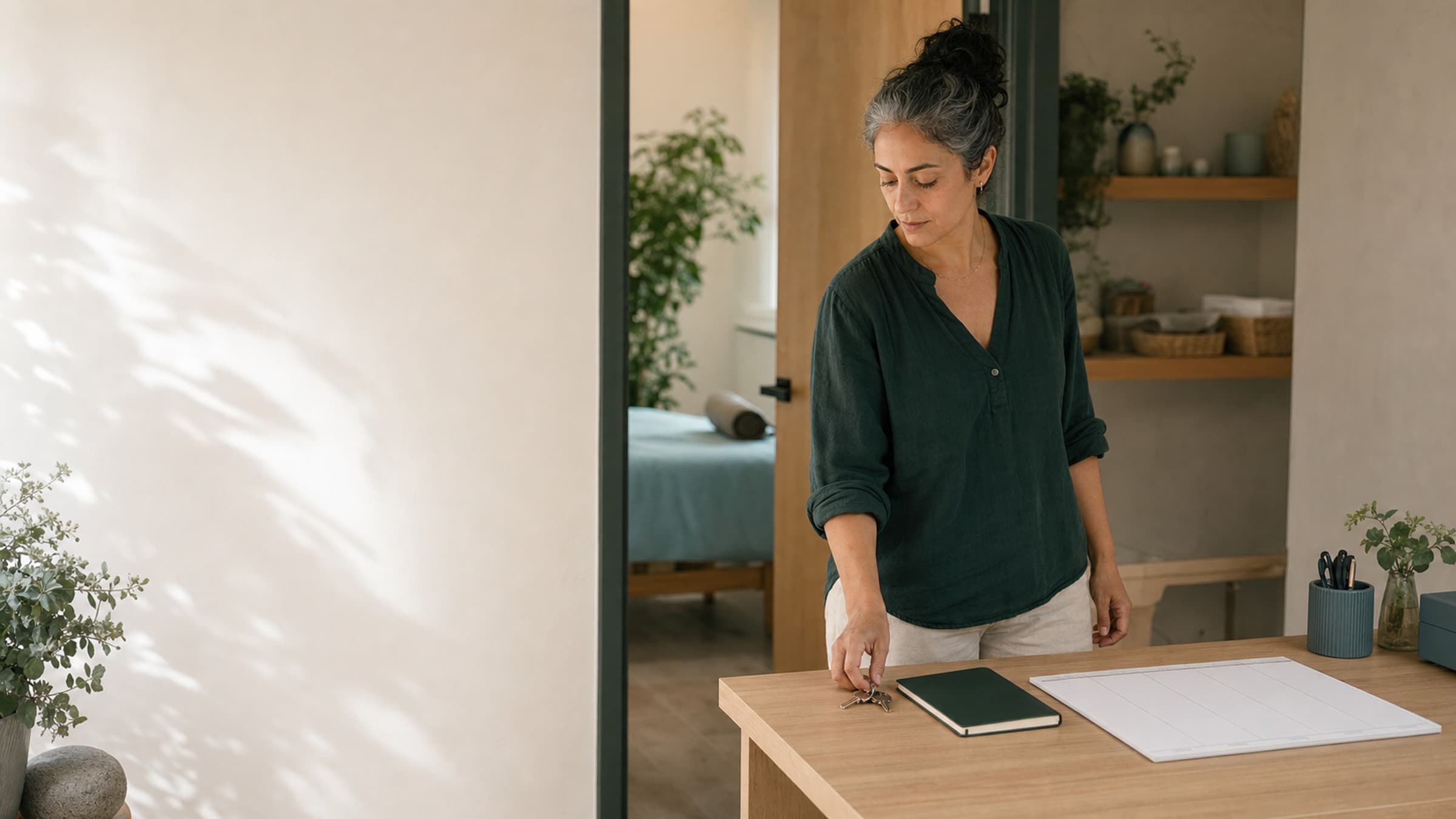

The leave nobody plans well
In most jobs, leave is a form you submit. In a solo practice, leave is a small business deciding to stop earning for a while.
There is no one to cover your caseload. There is no paid leave waiting in an account. The months before the baby arrives are spent doing the math nobody teaches you: how long can the practice go quiet before the rent and the software and the insurance stop being payable. Some practitioners save aggressively for a year. Some take three weeks because that is all the runway they have. Most land somewhere in between and feel guilty about whichever number they chose.
Then there is the harder part, which is telling clients. Saying "I am going to be away for a while" to people who came to you precisely because you are steady and present feels like a small betrayal, even when it is the most ordinary human thing in the world. Some practitioners over-explain. Some say almost nothing. The ones who handle it best tend to do the same plain thing: give clients real notice, name who to contact in an urgent moment, and offer a clear sense of when they will be back without promising a date they cannot keep.
Coming back is not the same as resuming
Here is the thing nobody warns you about. You do not pick up where you left off, because the person who left is not quite the person who returns.
You come back more tired and, strangely, often more present. Sleep deprivation burns away a lot of performance. Many practitioners describe their first months back as clumsier and somehow more honest. They have less patience for their own polished techniques and more tolerance for sitting in something hard with a client, because they are living in something hard themselves.
The grief is real too. You miss the baby in the middle of a session and then feel ashamed for being somewhere else in your attention. You miss the version of your practice that was the center of your life, because now it is one of several centers, and it has to share.
The caseload did what caseloads do
While you were gone, your practice kept being a living thing. Some clients waited and came back the first week you reopened. Some found someone else and stayed with them, which stings even when you know it was the right call for them. A few drifted off entirely and you never learn why.
This is normal. It is not a referendum on your work. A practice is not a held breath. It is a tide, and tides move whether or not you are watching.
The practitioners who come back steadiest tend to reopen smaller than they closed. They start with three or four days instead of five. They leave the calendar deliberately under-full for the first month, not because they do not need the income but because they need the margin more. An empty hour after a session is not lost money in this season. It is the thing that lets you drive home without crying.
The boundary you did not have before
Before the baby, the hard stop at the end of the day was negotiable. You could run long, answer one more message, squeeze in a late client. Now there is a person waiting to be picked up, and the boundary holds itself because it has to.
Many practitioners describe this as the unexpected gift of the season. The thing they could never quite do for their own wellbeing, they can suddenly do for their child. The last appointment ends when it ends. The phone goes in the bag. The notes get finished tomorrow, or they get finished in the protected half hour you finally started guarding, instead of bleeding into the evening.
If there is one practical mercy in this stretch, it is keeping the running of the practice as quiet as possible so the few hours you do work can be clinical. Reminders that go out on their own. A booking page that lets returning clients rebook without a back and forth. Anything that means the limited energy you have goes to the people in the room, not the admin around them.
What the first months actually ask
Be slower than you think you should be. Tell clients the truth in plain language. Let the practice be smaller for a season without deciding that smaller is who you are now. Protect one boundary fiercely and let the rest be imperfect.
The room will still be there. The plant might even survive. And the work, it turns out, is patient enough to wait for you to come back to it as the person you have become, rather than the one you used to be.
If you returned to your work after a big life change, what surprised you most about who came back?