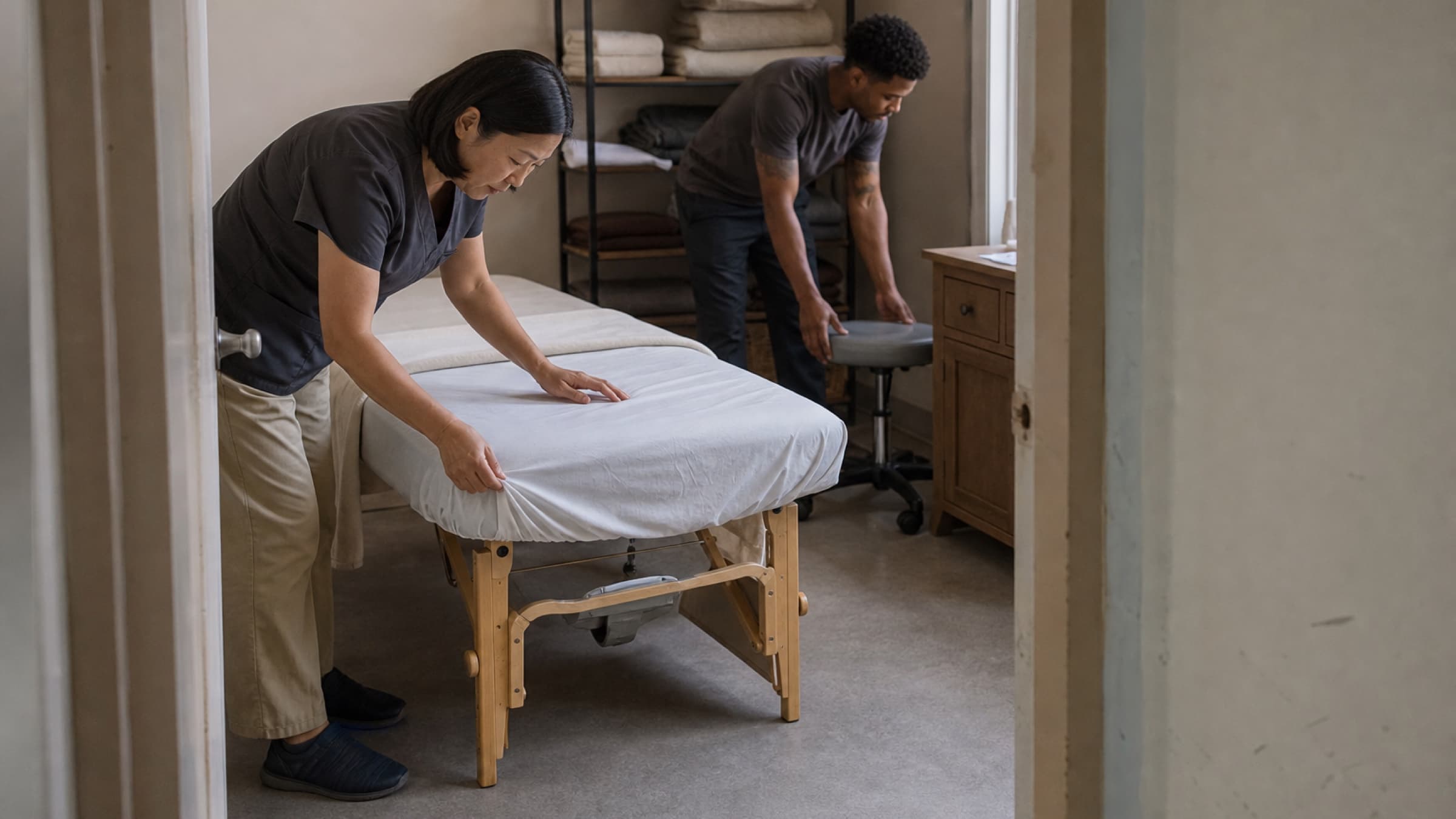

What a standing appointment actually does
Three things happen at once when a client moves to a regular repeating slot.
The decision disappears. Every booking is a small act of deciding: do I have time, is this the right week, let me check the calendar. For a client who genuinely benefits from regular care, that decision is friction that sometimes ends in not booking at all. A standing slot removes the friction. The default becomes attendance, and the client only has to act if they want to change it.
The work gets a rhythm. A lot of wellness work depends on cadence. Weekly for a stretch, then every other week, then monthly maintenance. When the cadence is built into the calendar, the client stays in the rhythm that actually helps, instead of drifting to longer and longer gaps because rebooking kept slipping.
Your calendar gets a backbone. A practice that runs entirely on one-off bookings starts every week near zero. A practice with ten standing appointments starts every week already partly full, with income you can roughly predict. That predictability is what lets you plan, take time off, and stop white-knuckling the slow weeks.
Who it suits, and who it does not
The clearest sign a client is ready for a standing slot is that they are already behaving like they have one. They come back on a roughly regular basis. They have a reason for ongoing care, not a single issue that is close to resolved. And the friction of rebooking is the main thing standing between them and the cadence you have both agreed is right.
Maintenance clients are the obvious fit. Someone you see monthly to stay ahead of a recurring pattern is a perfect candidate. So is a client in an active stretch of weekly work where consistency is part of the treatment. So is anyone who has told you, in some form, that they do better when something is on the calendar.
It is not a fit when care is winding down, when the client is still figuring out whether the work is for them, or when their schedule is genuinely too variable to hold a fixed time. Offering a standing slot to someone in their first few sessions can feel like you are locking in revenue before they have decided they trust you. Wait until the pattern is real, then name it.
A good internal test: would you be comfortable if the client said no? If offering the standing slot feels like a sales push you need to land, it is too early. If it feels like simply naming a rhythm that already exists, it is time.
How to offer one without pressure
The offer should sound like an observation, not a pitch. You are noticing a pattern and proposing to make it easier, and you are making it completely painless to decline.
At the end of a session, when you would normally rebook, try something like this. "I notice we have been meeting about every three weeks, and the rebooking back and forth is a bit of a hassle for both of us. Would it help if I just held Tuesdays at 2 for you on a repeat? You would have the same time each visit, and if a week does not work you just let me know and we move it. No pressure either way."
That phrasing does the important work. It names the existing pattern, so the offer feels like a description of reality rather than an upsell. It frames the benefit as theirs, the saved hassle and the protected time. And it makes the exit obvious before they have to ask: you can change it, you can skip a week, you are not signing a contract.
If they hesitate, take the hesitation at face value and back off warmly. "Totally fine, we can keep booking as we go." A standing appointment that a client feels cornered into will quietly become a source of guilt, and guilt ends relationships. The only standing slot worth having is one the client actively wanted.
The money side
Standing appointments are good for cash flow, but be careful how you connect the two out loud.
The honest framing is that a regular slot benefits the client first and your calendar second. Lead with the client's benefit, because that is the true reason it works. The revenue stability is a real and welcome side effect, not the headline.
Decide in advance how billing works for the repeat. Some practices charge each session as it happens, exactly as they would for a one-off. Some collect payment in advance for a block of standing sessions, which deepens the commitment but raises the stakes on cancellations. Either is fine. What matters is that the client knows which one applies before the first repeated session, not after.
If you offer any kind of pricing consideration for committing to a standing cadence, keep it simple and state it once. A small loyalty gesture for regulars is reasonable. A complicated tiered discount that depends on attendance turns a calm arrangement into bookkeeping. The whole point of a standing appointment is less friction, so do not add some back through the pricing.
Cancellation rules for a standing slot
This is where standing appointments either stay easy or quietly sour, so be clear up front.
A standing slot needs the same cancellation policy as any other appointment, applied the same way. If you have a 24 or 48 hour window, it covers the repeat too. Say so when you set it up. "Same as always, if you need to move a week, just give me a day's notice and there is no charge." The client should never be surprised by a fee on a slot they thought was flexible.
Build in an easy skip. The feature that keeps a standing appointment healthy is the ability to drop a single occurrence without canceling the whole arrangement. A client who is traveling one week should be able to skip that Tuesday and keep every Tuesday after it. If skipping one week feels like it might unravel the standing slot, clients will hesitate to take a needed break, and resentment grows on both sides.
Decide your line on repeated no-shows. A standing appointment is a held block of your time, which is valuable. If a client misses several in a row without notice, the arrangement is not serving either of you, and it is fair to convert them back to booking as they go. Frame it without blame. "It looks like a fixed weekly time is not quite working with your schedule right now. Let us go back to booking each one as it comes, and we can set up a standing time again whenever it fits better."
When to wind one down
A standing appointment is not meant to last forever, and saying so out loud keeps it from becoming a trap.
As care progresses, the right cadence usually lengthens. Weekly becomes biweekly becomes monthly. Revisit the rhythm openly when you sense it has shifted. "We have been weekly for a while and you are doing really well. Want to move the standing time to every other week and see how that feels?" Letting the slot evolve with the client's actual needs is what makes it care rather than a revenue lock.
And when the work is genuinely complete, end the standing appointment cleanly, the same way you would close out any course of care. Leave the door open for them to set up a new standing time if something brings them back. The arrangement was always about serving the work, and when the work changes, the arrangement should change with it.
Make the calendar hold it for you
A standing appointment only stays easy if the logistics are handled for you instead of by you. The value evaporates if you are manually re-creating the same slot every week and remembering to send each confirmation by hand.
Stillpoint lets you set an appointment to repeat on a schedule, so the same slot is reserved automatically and the client gets a confirmation for the series rather than a fresh round of back and forth each time. Skipping a single week or changing the cadence does not unravel the rest, and the client record keeps the history of the arrangement in one place. If you have one or two clients who already meet with you like clockwork, the simplest next step is to stop re-deciding it together and let the calendar hold the rhythm for you.