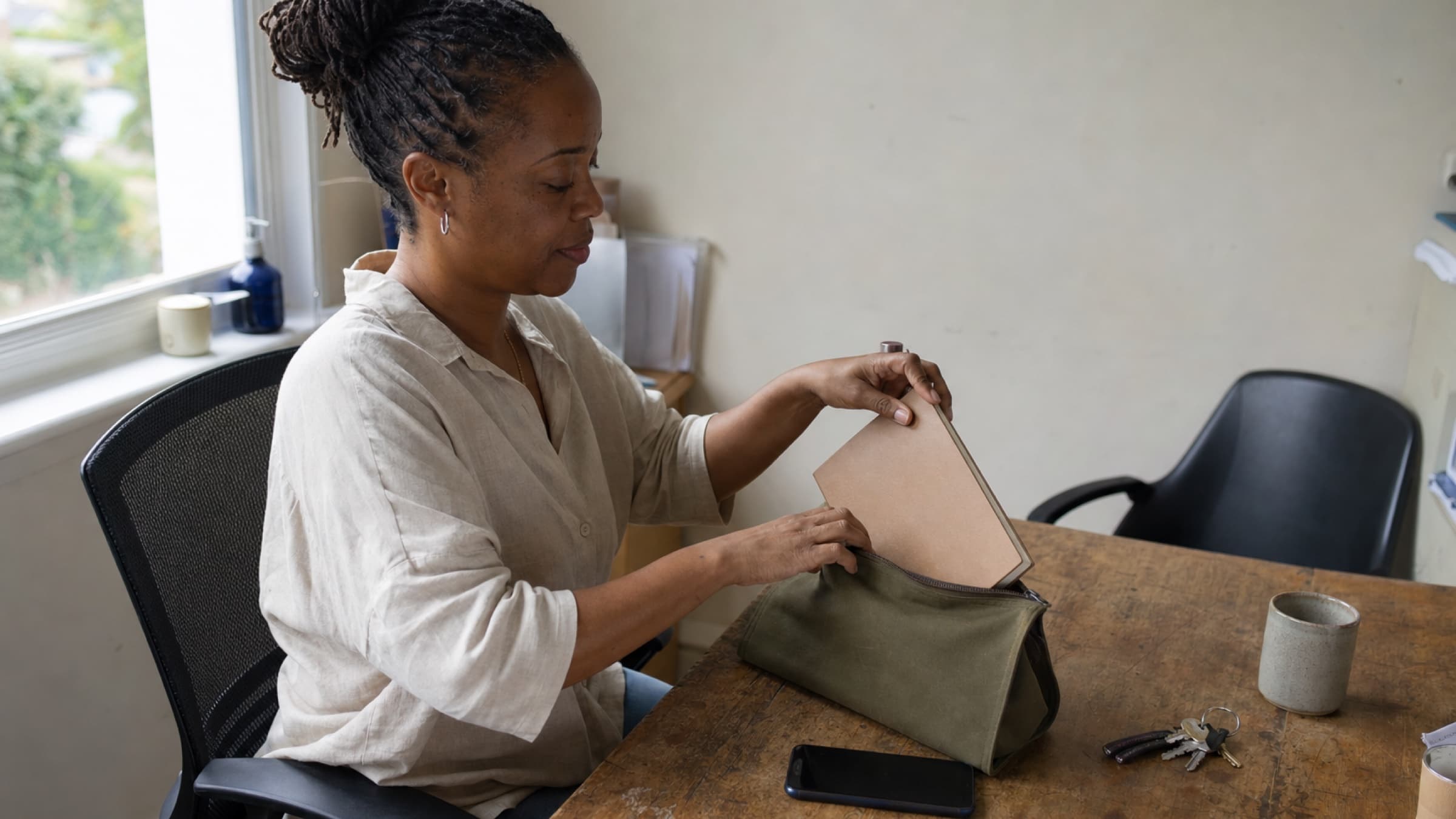

What the buffer is actually for
When you list out what has to happen between the end of one session and the start of the next, the list is longer than ten minutes suggests.
You have to write the note for the session that just ended, or at least enough of it that you do not lose the thread. You have to send the client out, which often means a conversation at the door, a check-in about rebooking, a payment, or a moment of unhurried goodbye. You have to reset the room. You have to pause long enough that the next person is not getting the residue of the last one. You have to drink water and use the bathroom.
If you have ever finished a day feeling like you never quite caught up with yourself, the buffer is the part of the schedule where the catching up was supposed to happen.
The good buffer does three jobs. It closes one session cleanly. It opens the next one well. And it leaves a small margin for the day to breathe when something runs long.
Why ten minutes is rarely enough
Ten minutes works on paper. On a typical day it does not.
A session that ends on time is not finished when the clock says it is. The client has to gather themselves, settle a payment if you take it in the room, and rebook. The exchange at the door is short, but it is rarely shorter than three or four minutes, and on the days when it matters most, it is closer to seven. The next client may already be in the waiting area watching the clock.
So the ten minutes you allotted to write the note, reset the room, and breathe is actually three or four minutes once the door closes. Three or four minutes is not enough to write a note you will trust in two weeks, and it is not enough to clear the previous client out of your head before the next one walks in.
You can run a day this way. Many people do. But there is a cost. The notes slide later and later into the evening, the body holds the day longer, and the work itself begins to feel administrative instead of attentive. The deficit compounds.
When fifteen is the right number
For most office-based work, fifteen minutes is the floor that holds a day together.
In fifteen minutes you can write the bulk of a note, send the client out cleanly, take a breath at the window, and walk into the next session as the person the next session needs you to be. You will still get behind on the hardest days. You will not be living in the deficit by Friday.
Fifteen minutes works because it preserves the natural shape of a session ending: a closing exchange, a transition, a reset. None of those steps wants to be hurried. None of them is the place where minutes should be saved.
If you are setting your buffer for the first time, or rebuilding it, fifteen minutes is the answer for almost any office-based modality with quick notes and a friendly handoff at the door.
When you need more
There are kinds of work where fifteen minutes is not enough, and pretending it is will cost you the quality of the work.
If your notes are clinical and detailed, plan twenty. You are not writing faster than the rest of us. Acupuncturists tracking points and patterns, naturopaths writing a full clinical summary, therapists working in modalities with structured notes all need closer to twenty.
If you are doing hands-on work, the room needs to be reset. Linens have to come off, surfaces have to be wiped, oils have to be put away. Twenty minutes is the minimum, and on a heavy day twenty-five is honest. You can hide the time inside the appointment length, but it has to live somewhere.
If you are running back-to-back virtual sessions, do not let the fact that there is no waiting room collapse the buffer to five minutes. The screen is more depleting than the room. Twelve to fifteen is the floor.
If you are running a long day, the last buffer of the day should be longer than the first. The reserves are smaller in the afternoon, and a slightly longer pause holds the last sessions in shape.
If your work moves the nervous system in a meaningful way, the buffer is not just for you. Some clients need a few quiet minutes in the room before they stand up. A buffer of ten leaves no room for that. Twenty does.
What to actually do in the buffer
A buffer that you do not use is not really a buffer. It collapses into doom-scrolling or the next email, and you arrive at the next session not actually reset. The buffers that hold a day together are the ones you spend on a small, repeatable shape.
Most practitioners we know land on some version of this:
The first five minutes go to the room. Reset surfaces, replace linens, open a window for a minute, change the music if you have it. Physical reset is faster than mental reset, and doing it first frees the rest of the time.
The next stretch goes to the note. Not the polished version. The shape of the note: what happened, what you noticed, what you want to remember. If your platform lets you finish later, finish it later. The buffer is for capturing the thread, not for perfecting the prose.
Save the last two or three minutes for yourself. Stand at the window. Drink water. Do nothing intentionally for one minute. The clients who come in after a colleague have a particular quality of being met, and most of that quality is the practitioner not carrying the previous person into the room.
When the buffer is long enough that you can do all three of these things, the day stays in shape even when one session runs late.
When something runs over
Even with a generous buffer, something will run over. A client opens something in the last five minutes that you cannot abandon at the door. An emergency rebook lands during the gap. You answer the phone for what was supposed to be a quick question.
The buffer absorbs the overflow on a good day. On a bad day, the overflow eats the buffer, and you are back to the relay race for the rest of the afternoon.
There are three ways to make the system more forgiving.
The first is a longer buffer in the middle of the day, the one before your lunch or your longest break. If you build a thirty-minute reset somewhere in the middle, you have a place where the day can self-correct.
The second is one slightly longer buffer in the afternoon, scheduled as a real appointment with yourself. Twenty-five minutes on the calendar, named "reset," with nothing in it. You will not always need it. The days you do, it is the thing that keeps the last session as good as the first.
The third is the boring one: end on time. Most overruns come from the last seven minutes of a session being soft. A short, clear closing ritual, run the same way every time, costs nothing and protects everything that comes after.
The signal the buffer sends to the client
The buffer is not only for you. It is also for the person walking in.
A client who arrives to find a calm room, a practitioner who is not visibly catching their breath, and a door that closes without a rush, settles faster. They do more work in the session. They feel held. None of that is about the words you say in the first thirty seconds. It is about whether the buffer did its job before they walked in.
The opposite is also true. A client who arrives to find the previous person still gathering their coat, a practitioner half-finished with a note, and a room that smells like the last hour, spends most of the first ten minutes deciding whether they can let down. Many of them do not.
In a wellness practice, the buffer is one of the few unbillable parts of the day that meaningfully changes the quality of the billable parts.
Setting it on the calendar and leaving it alone
Once you decide what the right buffer is for the kind of work you do, set it once at the service level and stop revisiting it. The buffer should not be a decision you make session by session. It should be a property of how you work.
If you offer different services with different reset needs, the buffer should reflect that. A short consult does not need the same gap as a full session. A bodywork service does not need the same gap as a talk session. Setting them individually, at the service, lets you take on the volume the day actually allows without surrendering the buffers that protect the work.
The mistake to avoid is using the buffer as a release valve for an over-full day. If you are tempted to drop the buffer to fit one more client in, the answer is almost always to take fewer clients, not to take the same number with less air between them. The buffer is the part of the day that is keeping you in business in two years.
The closing
You did not become a practitioner so that the calendar would dictate the quality of your attention. The buffer is the small lever in the schedule that puts that quality back in your hands.
Look at the buffer you have set today. If it is ten minutes for office work, try fifteen for a week and see what your evenings feel like. If it is fifteen for bodywork, try twenty. The number you land on will not be the same as anyone else's. The right number is the one where you walk into every session as the person the client came to see.
In Stillpoint, you can set a buffer at the service level so each kind of session gets the gap it actually needs. It is one of the few settings worth looking at twice a year. The calmer practice that comes from getting it right is not a feature. It is the work showing through.