
Practice Management
175 articles about practice management.

Set Due Dates Your Team Can Trust
Choose task due dates from the real moment the work matters, leave enough time to act, and keep overdue work honest instead of quietly moving it forward.

Keep a Before Version of Your Practice Website
Use a simple before-and-after process to update your practice website with less second-guessing and a clear way back if the change does not work.

Make Your First Group Class Easy to Join
Help new group-class clients arrive prepared, settle in quickly, and know what to expect without turning your welcome into a long rulebook.

Separate Waiting Work From Ready Work
A simple status rule helps your team tell the difference between work that needs action now and work that is still waiting on someone else.

Set Up Couple Records Before the First Session
Prepare joint and individual records for couples work before the first appointment, so notes, intake, billing, and privacy stay clear.

Make Client Portal Sign-In Easy to Explain
Give clients one simple explanation for portal sign-in, reduce avoidable confusion, and keep one-time codes and links private.

Check the Status Page Before You Rebuild Your Day
Use a short outage check to separate a local problem from a service incident, protect client work, and avoid unnecessary schedule changes.

Before You Delete Your Practice Account
Use a calm exit checklist to protect records, clients, bookings, billing, and your chance to reverse a practice account deletion.

Give Each Practitioner the Right Client Access
Choose client access by the work each practitioner does, then review it when roles, coverage, or care relationships change.

Set a Weekly Rhythm for Insurance Claims
Use one short weekly claims routine to catch missing details, submit work on time, and keep small billing problems from becoming a backlog.

Keep Process Notes Separate From the Progress Note
Use a simple boundary between the official progress note and your private working observations, so both stay clear and useful.

Let Clients Choose When Appointment Reminders Arrive
A good default reminder schedule helps most clients. Giving people a simple way to adjust the timing makes reminders more useful without adding work for your team.

Give Every Treatment Plan a Review Date
A treatment plan stays useful when you decide when to review it. Use a simple review date to check progress, adjust goals, and close plans cleanly.

Write a Service Category Intro That Helps Clients Choose
A short service category intro can help clients find the right place to start. Learn what to include, what to leave out, and how to test it.

Show Only the Practitioners You Need on Your Calendar
A focused calendar view helps front-desk staff, practitioners, and owners see the right part of a busy practice without losing the full picture.

Archive a Practitioner Without Rewriting the Past
Use a calm offboarding checklist to stop new work, protect continuity, and preserve the history attached to a practitioner who leaves your practice.

Choose the First Step on Your Booking Page
Choose whether clients should start with a service, practitioner, or location so your booking page asks the easiest useful question first.

Choose One Public Link for Your Practice
One dependable public link makes your practice easier to find, easier to share, and less likely to send clients to an outdated page.

Give Every Practice Task One Clear Owner
A task is easier to finish when one person owns the next action, the deadline is visible, and the handoff has a clear end.

Close the Loop After a Waitlist Offer Expires
An expired waitlist offer still needs a clear next step. Use this simple review to decide who stays in line, who needs a note, and what to improve.

Name Client Documents So You Can Find Them
A simple file-naming rule makes outside records, signed forms, and scanned documents easier to find without exposing more detail than you need.

Make Membership Renewals Easy to Understand
Clear membership terms help clients know what they receive, when they pay, what happens to unused visits, and how they can make a change.

Plan a Week of Practice Posts in 20 Minutes
A simple three-post routine helps your practice stay visible online without turning content planning into another weekly project.

Choose Which Practice Updates Deserve a Text
Not every practice update needs to interrupt the day. Build a simple notification plan so urgent changes reach the right person without creating constant noise.

Protect Travel Time Around Home Visits
A home visit takes more than the time you spend with the client. Build an honest travel envelope so one appointment does not make the rest of the day run late.

Set a Reorder Point for Practice Supplies
A simple reorder point helps you replace everyday practice supplies before they run out, without turning inventory into a second job.

Decide Whether Tipping Fits Your Practice
A tip prompt is not neutral. Decide whether it belongs in your practice, make no tip easy, and choose settings that match your professional boundaries.

Pick Three Numbers for Your Monthly Practice Review
A useful monthly review does not need a large spreadsheet. Choose three practice numbers, ask one question about each, and decide what to do next.

Take Website Photos That Feel Like Your Real Practice
You do not need a full photo shoot to make your practice website feel trustworthy. Start with a few honest images that help clients picture arriving.

When a Client Leaves Something Behind
A forgotten scarf, wallet, or piece of equipment needs a simple, privacy-conscious pickup process. Here is how to return it without creating more confusion.

Review Recurring Appointments Before They Drift
A short recurring-appointment review keeps standing bookings aligned with the client's needs, your availability, and the rhythm you both agreed to.

Name Invoice Line Items Clients Can Recognize
Clear invoice line items help clients understand a charge, keep better records, and ask fewer questions months after an appointment.

Sit in Your Own Waiting Room for Ten Minutes
A short waiting-room check can reveal small sources of confusion, discomfort, and lost privacy before your clients have to mention them.

Clean Your Client CSV Before You Import It
A short cleanup before a client-data import can prevent duplicate records, scrambled dates, and hours of correction after the move.

Plan for One Empty Seat in Every Group Class
A simple cancellation and standby plan helps you refill group-class seats fairly without rushing, overbooking, or pressuring clients.

Set a Minimum Booking Notice That Works
Choose a booking notice window that protects preparation time without making useful openings harder for clients to find.

When New Clients Need a Consultation First
A consultation-first booking rule can protect fit and clarity without turning your booking page into a barrier clients cannot understand.

Review Unconfirmed Appointments Without Chasing Everyone
A short daily review helps you follow up on uncertain appointments without turning every unanswered confirmation into a phone-call campaign.

Tell Clients When Payment Happens Before They Book
A clear payment-timing sentence on your booking page can reduce hesitation and avoid surprise. Here is what to say for each payment setup.

Give Every Team Member Their Own Login
Shared practice logins make ordinary work harder to trace and access harder to remove. Use this practical plan to give each team member the right account.

Make a 15-Minute Internet Outage Plan
A short internet outage plan helps you protect privacy, make clear appointment decisions, and keep one broken connection from unsettling the whole day.

Give Clients One Place to Finish What Is Pending
A clear client follow-through path reduces missed forms, unpaid invoices, and repeated messages without adding more admin for your practice.

Build a Morning Brief You Can Read in Five Minutes
A short morning brief helps your practice team spot schedule changes, missing actions, and unclear ownership before the first client arrives.

Build a Transfer Kit for Split-Location Days
A small transfer kit helps you move between practice locations without carrying client information, forgetting essentials, or rebuilding the room each time.

Review No-Shows Without Blaming Your Clients
A calm monthly no-show review helps you find useful patterns, choose one practical change, and keep policy decisions grounded in evidence.
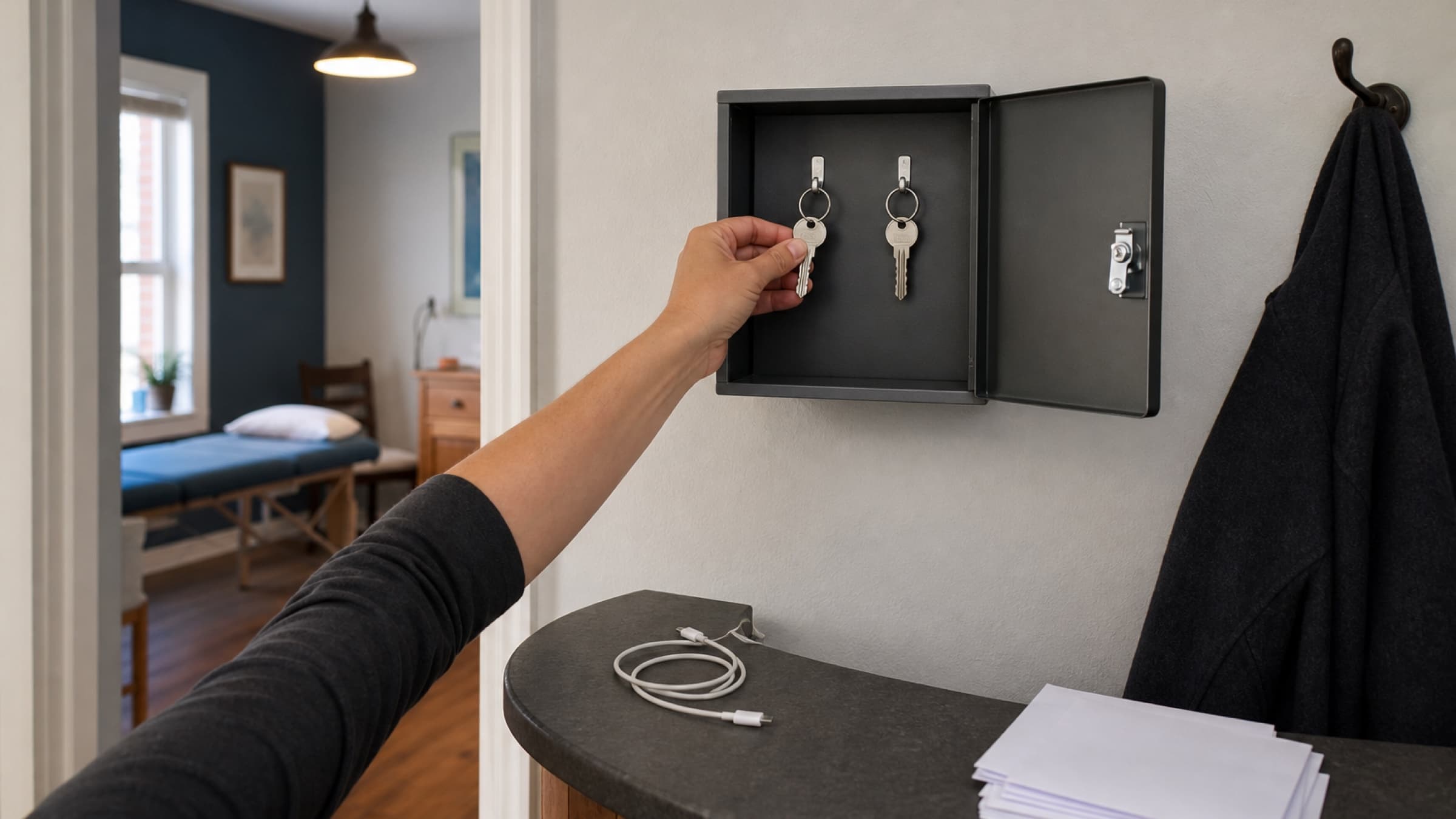
Make a Backup Plan for the Only Practice Key
A simple access backup keeps one lost key, dead fob, or unavailable opener from cancelling a full morning of client appointments.

Write Arrival Instructions Clients Can Actually Follow
Clear arrival instructions help clients find the right door, plan for access, and reach their appointment without a last-minute phone call.

A Ten-Minute Friday Calendar Check
Use a short Friday calendar check to catch unclear bookings, room conflicts, missing intake, and Monday surprises before the week begins.

Run a Five-Minute Video Session Rehearsal
Test your video-session setup from both sides before a real appointment, then write a simple backup plan for sound, privacy, links, and connection trouble.

Build a First-Day Checklist for New Practice Staff
Give a new team member a calm, practical first day with clear access, real workflow practice, stop points, and a short plan for follow-up.

Retire a Service Without Erasing Its History
When you stop offering a service, close the booking path carefully while keeping past appointments and useful records easy to understand.

Ask for Software Help Without Sharing Client Details
A useful support request explains the broken workflow clearly while keeping names, health details, passwords, and one-time codes out of the message.

Keep Clinical Detail Out of Practice Tasks
A practice task should make the next action clear without copying sensitive clinical context into another part of your workflow.

Test Your Booking Page Before You Share It
A booking page can look finished and still leave clients stuck. Use this short test to catch unclear choices, missing details, and dead ends before you share the link.

Before You Let an AI Assistant Take Action
AI can help with practice admin, but a useful suggestion still needs a careful review. Use this checklist before you approve an action.

When an Appointment Email Should Say Less
Appointment emails can be useful without naming the client, service, or practitioner. Use this practical review to reduce what appears in an inbox.

What to Do With a New Device Sign-In Alert
A new-device alert is useful only if you act on it. Use this calm checklist to verify the sign-in, secure the account, and improve your response plan.

When Your Practice Stops Taking Online Bookings
Turning off online booking is a whole-practice decision. Use this checklist to close the front door clearly while keeping existing clients supported.

Not Every Service Needs the Same Intake Form
Match each intake form to the service being booked so clients answer useful questions without repeating paperwork that does not apply.

A Practice Holiday Is Not Personal Time Off
Closing the whole practice and blocking one practitioner's calendar are different decisions. Use the right one so clients see accurate availability.
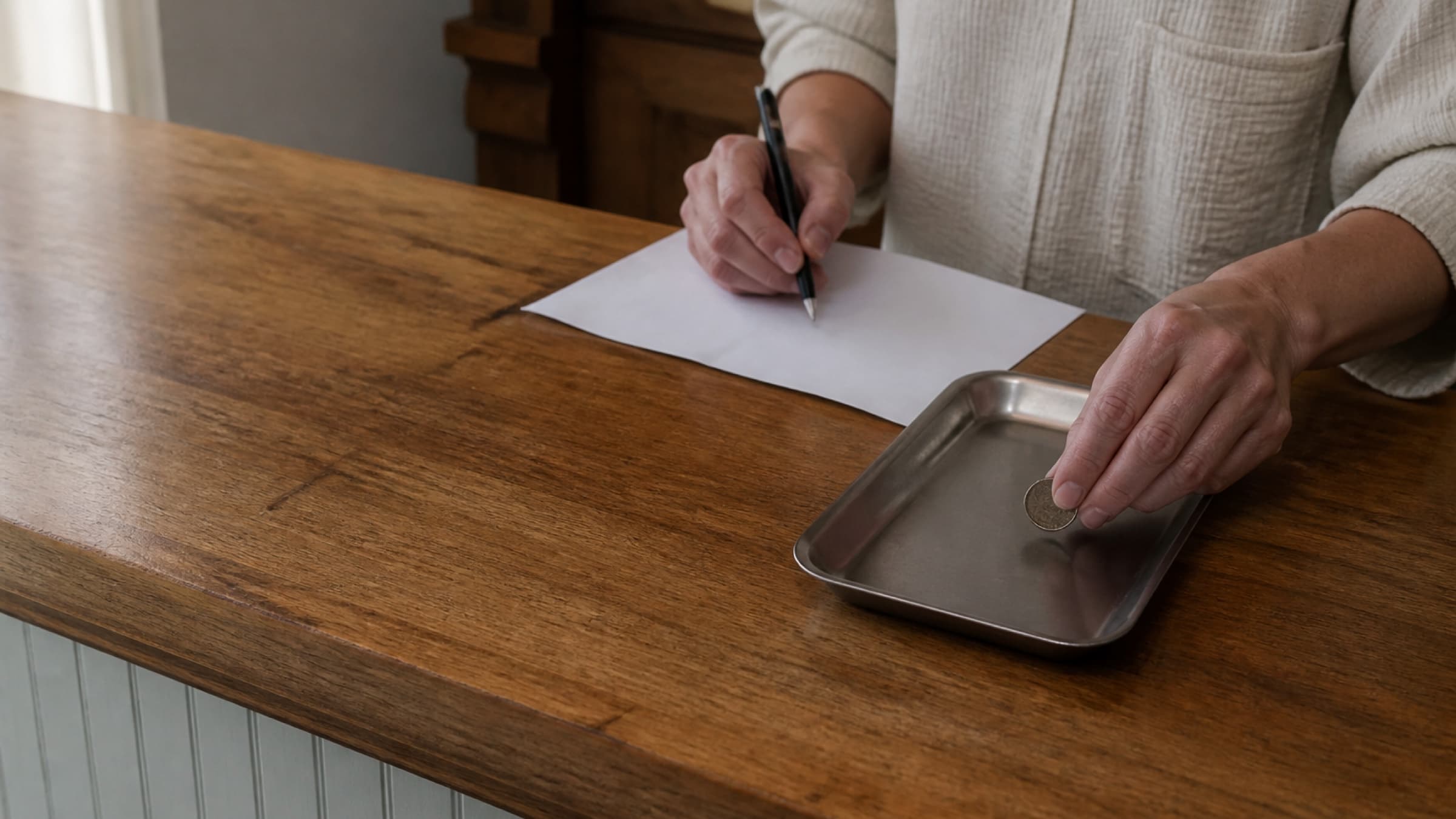
When a Balance Is Too Small to Pay Online
A tiny invoice balance can create a surprisingly awkward client experience. Use this simple process to resolve it clearly and prevent it next time.

Before You Press Record in a Client Session
A calm recording process starts before the session. Use this practical checklist to explain the tool, ask for consent, and protect the conversation.

A One-Off Appointment Is Not a New Schedule
A thoughtful scheduling exception can help a client without changing your boundaries. Use this simple process to make one-off appointments stay one-off.

What Not to Put in an Appointment Text
A useful appointment text stays short and protects client privacy. Learn what to include, what to leave out, and where sensitive details belong.

When Two Practitioners Share One Treatment Room
A shared treatment room needs its own schedule. Use these practical rules to prevent conflicts, protect turnover time, and make handoffs easier.

The Birthday Email That Does Not Ask for Anything
A thoughtful birthday email can recognize a client without turning the moment into a sales pitch. Use this guide to write one that feels warm and light.

The Gray Text Your Clients Cannot Read
Faint text can hide fees, directions, and booking details. Use this practical contrast check to make the quiet parts of your client experience readable.

Where Does the Client's Reply Go?
A five-minute reply-path check can keep appointment questions, form updates, and scheduling changes from landing in the wrong inbox.

Before You Send That Receipt
A two-minute receipt check can save your client a rejected reimbursement claim and save you a second round of paperwork.

The Voicemail Greeting You Never Rerecorded
The greeting on your practice line was recorded in a hurry, before your hours, rates, and booking system were what they are now. It is quietly shaping every first impression that starts with a phone call.

When an Appointment Moves to Another Practitioner
Reassigning an appointment is more than changing a name on the calendar. Here is how to make the handoff clear for the client and both practitioners.

When You're Running Behind
The morning slipped, the next client is waiting, and the day is about to tilt. Here is how to handle a delay in a way that keeps the appointment and steadies the rest of your week.

Rebooking Before They Leave the Room
The next appointment is easier to make when the session is still fresh. A calm, unpushy habit for turning a good visit into a returning client.

What Belongs on Your Personal Calendar?
Calendar sync can prevent double bookings while quietly sharing more client detail than you intended. Here is a simple way to keep the useful parts and protect the rest.

The Supplies You Only Notice When You Run Out
Small supply shortages can derail a full clinic day. Build a simple restocking habit that catches what is low before a client is waiting.

When the Session Is Done but the Invoice Is Not
A completed session can quietly go unbilled when the handoff to admin is unclear. Here is a simple way to find the gaps and close them.

Lessons You Only Learn by Staying
Some things about private practice cannot be taught in a workshop. They arrive slowly, over years, usually after you get them wrong first. Here are a handful that tend to show up eventually, offered as composite lessons many practitioners recognize.

The Sunday Night Look at Monday
Most practitioners already do it, quietly, before bed. A five minute look at the week ahead can decide how the week actually goes. Here is what to notice, what to leave alone, and how to make Monday morning feel less like an ambush.

When Your Booking Page Has Too Many Choices
A long service list can make booking harder, even when every option is useful. Here is how to simplify the choice without shrinking your practice.

You're Not Behind. You're Full.
The nagging sense that you are always a little behind is one of the most common feelings in private practice. It is also one of the most misread. Often it is not a discipline problem. It is a capacity signal, and it asks for a structural answer, not a harder push.

When the Intake Form Is Still Blank
A missing intake form does not have to derail the appointment. Use a calm follow-up routine, a clear cutoff, and a backup plan that protects the session.

The 10-Minute Practice Closing Routine
A short closing routine helps you finish the day without carrying every loose end home. Here is a 10-minute reset for your calendar, notes, payments, and tomorrow.

The First Day Back From Vacation
Coming back to a practice after time away is its own small event. Here is how to plan the first day so it holds you, instead of ambushing you the moment you unlock the door.

The Session You Overran
You look up and the clock says eleven past. The client is still talking, still moving, still needing something. Here is why sessions run long, what it actually costs, and how to close cleanly without cutting the person in front of you off.

When a Client's Card Is Declined
A declined card can make an ordinary checkout feel personal. Here is how to handle it calmly, protect privacy, and get payment sorted without changing the relationship.

When a Client Arrives Too Early
An early client can quietly throw off your whole day. Here is how to set a kind arrival boundary without making anyone feel unwelcome.

When a Client Asks If It's Working
Sooner or later a client will look at you and ask whether the sessions are actually helping. Here is how to answer honestly, keep their trust, and turn the question into a better conversation about progress.

When a Client Brings Someone to Their Appointment
A client shows up with a partner, a parent, or a child in tow, and you have thirty seconds to decide what to do. Here is how to handle the extra person in the room without derailing the session or making anyone feel unwelcome.

Filling Last Minute Openings Without the Scramble
A cancellation at 9am does not have to mean an empty hour at 2pm. Here is a calmer way to fill the gap before it costs you the day.

Blocking Time Off Before Your Calendar Fills It
An open slot on your booking page is an invitation, and clients will take you up on all of them. Here is how to protect lunch, admin time, and actual days off by blocking them before the week fills in, instead of apologizing your way out of bookings later.

When You're the One Who Has to Cancel
Sooner or later you will have to cancel on a client. How you handle that message decides whether the relationship holds or quietly frays. Here is how to do it cleanly, without over-apologizing or losing the booking.

Lessons That Only Show Up With Time
There are things about private practice that no training program can hand you and no book can shortcut. They arrive slowly, usually after you have done the opposite for a while. Here are a handful of lessons practitioners tend to reach on their own, drawn from the kinds of things people say once they have been at this long enough to trust what experience taught them.

The Client You Keep Meaning to Raise the Rate On
Almost every practice has one. A longtime client whose rate has quietly fallen behind the rest, and every year you decide to bring it up, and every year you don't. Here is why the conversation feels so heavy, and a short, kind way to finally have it.

What a Reliable Client Is Actually Worth
Most practitioners rank their clients by rate, and the highest payer sits quietly at the top of the list. But the true value of a client to a practice is not the size of the fee. It is the friction around collecting it. Here is a look at why the person who books the same slot and pays without being chased may be worth more than the one who pays double.

When You Run Into a Client in Public
Sooner or later, you round the aisle at the grocery store or turn from the coffee counter and see a face you know from the room. It happens to every practitioner, and it is rarely as smooth as we hope. Here is how to think about the encounter before it happens so it does not need much thought when it does.

How to Introduce a New Service to Existing Clients
You added a new offering and now you have to tell people about it. Your current clients are the warmest audience you will ever have. Here is how to introduce a new service without sounding like a sales pitch.

Should You Let Clients Book Online?
Online booking feels like handing your calendar to strangers. It does not have to. Here is what you actually keep control of, what changes for the client, and how to open it up without losing the personal touch.

When to Offer a Client a Standing Appointment
A standing appointment, the same slot every week or every month, is one of the quietest ways to steady your calendar and a client's progress at the same time. Here is who it suits, how to offer one without pressure, and how to handle the slot when life gets in the way.

When You Make a Mistake With a Client
Double-booked, wrong time, a charge that should not have gone through, a recommendation you got wrong. Mistakes happen in every practice. What clients remember is not the error, it is how you handled it. Here is a calm, plain way to own it, fix it, and keep the trust.

What Private Practice Teaches You That School Didn't
Training prepares you to do the work. It does not prepare you to run the place where the work happens. Here are the lessons practitioners tend to learn slowly, over years, once the clinical part is no longer the hard part.

When a Past Client Comes Back
A client you saw last year sends a short email asking to get in. They are not new and not exactly current. Here is how to bring them back in without making it awkward, re-doing intake you do not need, or charging them like a stranger.

The Loudest Client Is Not the Average Client
The feedback you hear is wildly unrepresentative of the feedback that exists. A practical look at why your loudest clients shape your practice more than they should, and how to weigh what you hear by how many people it actually describes.

When a Client Is Ready to Stop
One of the harder skills in a wellness practice is naming the end of a course of care. Here is how to recognize when the work is done, raise it without scaring the client off, and close out the relationship in a way that keeps a door open.

The Follow-Up After a First Session
A short, low pressure note in the day or two after a first session is one of the most quietly effective messages a practice sends. Here is how to write it without sounding like a sales sequence.

Writing a Reminder a Client Actually Reads
Most reminders are skimmed at a red light, a checkout line, or in the half second before the phone goes back into a pocket. Here is how to write one that does its job in that window.

Naming Your Services So Clients Know What to Book
The names on your booking page do more work than your service descriptions ever will. Here is how to write service names that get the right client into the right slot without a single follow up email.

What to Put in Your Booking Confirmation
The booking confirmation is the most opened email your practice will ever send, and most practitioners ship the platform default and never look at it again. Here is what to put in it, what to leave out, and why the email is doing more work than you think.

Writing a Cancellation Policy That Holds
Every practice has a cancellation policy. Most of them quietly fail the moment a kind client cancels at the wrong hour. Here is how to write one you will actually enforce, and how to keep the relationship while you do.

The Quiet Week That Isn't a Crisis
Four bookings instead of fifteen. The instinct is to panic, discount, or blast something out. Most of those instincts are wrong. Here is how to read a thin week without setting your practice on fire.

The Buffer Between Sessions: How Much Time You Actually Need
Most practitioners set a buffer between sessions once, when they first build their calendar, and never look at it again. Ten minutes becomes the default, and the day quietly bends to fit. This is a closer look at what the buffer is for, where ten minutes is enough, and where it is not.

Writing a Short Intake Form: What to Actually Ask
Most wellness intake forms have grown by accretion. A question gets added after a difficult session, another after a billing surprise, and three years later the form is four pages long and nobody fills it in fully. Here is how to write a short intake form that does its job.

Taking a Week Off Without Losing the Practice
Most solo practitioners do not skip vacations because they cannot afford them. They skip because the week before feels impossible. Here is how to plan time off so the practice holds without you, and so you actually rest while you are gone.

When a Client Asks for a Discount
A client emails to ask if you could lower the price, or knock something off, or do a sliding-scale rate. The request is rarely about the money. Here is how to think about it, what to say, and when yes is actually the right answer.

How to Finish Your Session Notes Before You Leave the Office
Most note backlogs are not a discipline problem. They are a workflow problem. Here is how to set up your week so notes are done by the time you close the laptop, not on Sunday night.

How to Stop Double-Booking Yourself for Good
Double-bookings almost never come from carelessness. They come from a gap between the place clients book and the place you actually live. Here is how to close that gap so two people never claim the same slot again.

Filling a Last-Minute Cancellation Without Sounding Desperate
A short playbook for the hour after a client cancels: who to message, how to ask, and what to put in the email so the slot fills without the begging energy.

When a Client Goes Quiet After a Few Sessions
The client who came three times and then stopped is not a lost cause and not a referendum on your work. A calm, practical guide to noticing the fade, reaching out once, and letting the rest go.

Should You Ask New Clients for a Deposit?
Deposits feel like you are accusing a new client of flaking before they have even arrived. Here is how to decide whether to ask for money up front, how much, and how to say it so it reads as normal rather than suspicious.

When a Friend or Family Member Wants to Book a Session
How to handle dual relationships gracefully: a short script for saying yes, saying no, and the in-between option that protects the friendship and the practice.

When a Client Asks if You Can Squeeze Them In
The 'any chance you have something today?' text catches most practitioners between guilt and irritation. A calmer way to decide, three short scripts for the three honest answers, and the schedule habit that quietly makes the question come up less.

When a Client Brings a Diagnosis They Found Online
The pre-session research is a feature of modern practice, not a problem. A grounded way to receive a self-diagnosis without dismissing the client or rubber-stamping a label that may not fit.

When a Client Texts 'I Just Realized We Had a Session Today'
The twenty-minutes-before scramble text isn't a no-show and isn't a normal arrival. A short script for either letting them keep the slot or releasing it cleanly, plus a quiet schedule fix that makes this happen less often.

When a Client Says 'One More Thing' On the Way Out
The doorknob disclosure is a feature of wellness practice, not a failure. A short script for honoring what they said without losing your schedule, plus what to do before the next session.

The First-Session Welcome Email That Sets the Tone
What you send between booking and the first session quietly decides how anxious they walk in. A short, plain welcome email does most of the work, and most practitioners are sending the wrong one.

What to Do When a Client Cancels Their First Appointment
First-appointment cancellations sting more than they should because there is no relationship yet to absorb the blow. Here is a calm way to respond, when to nudge, and how to tell whether the booking funnel is the real issue.

Writing the Rate Increase Email Without Losing Clients
Raising your rates is a normal part of running a practice, and the email is usually scarier than the response. Here is a calm way to write it, when to send it, and what to do if a client asks for the old price.

Replying to the 'Quick Question' Email Between Sessions
Clients email between sessions with questions that feel small to them and feel like unpaid consults to you. Here is a calm way to decide what to answer, what to redirect, and how to say it without sounding cold.

What Your Out-of-Office Auto-Reply Should Actually Say
Most auto-replies make clients feel ignored or quietly anxious. Here is how to write one that sets expectations, redirects what is urgent, and lets the rest wait until you are back.

When You're the One Who Missed the Appointment
A client shows up. You don't. There is a missed call, a polite text, and a knot in your stomach. Here is how to apologize, make it right, and quietly fix the cause so it does not happen again.

When a Client Texts You at 9 p.m.
A client texts your personal number on a Tuesday night. It is not urgent, but it is sitting there, and now your evening has a small open tab. Here is how to handle the message, set the channel, and stop the slow leak.

The One-Sentence Message to a Client You Haven't Heard From in a Month
Sometimes a client just goes quiet. They were coming weekly, and now it has been six weeks, and you do not know whether to say anything. Here is what the right message looks like, when to send it, and when to leave it alone.

When a New Client Books and Then Disappears
A new client books their first session, you set the time aside, and then nothing. No reply, no show, no message. Here is how to handle the first 48 hours, the week after, and how to make it rarer next time.

What to Do When the Same Client Keeps Moving Their Appointment
A chronic rescheduler is rarely a difficult person. They are a pattern. Here is how to read the pattern, raise it without sounding annoyed, and decide whether to keep holding the slot or open it for someone else.

How to Ask for a Referral in the Last Two Minutes of a Session
Most practitioners avoid asking for referrals because the standard script feels transactional. Here is a quiet, one-sentence way to do it at the end of a session that does not change the temperature of the room.

How to Handle a Refund Request Without Making It Weird
Refund requests are one of the most stressful emails a solo practitioner reads. Here is a calm way to sort the request into a category, decide quickly, and write a reply that protects both the relationship and your week.

What to Say When You Have to Cancel on a Client
The cancellation-on-a-client message is one of the hardest things a solo practitioner writes. Here is a calm, honest shape it can take, same-day or a week ahead, without the apology spiral.

Handling the Late Arrival: Run Over, Cut Short, or Reschedule?
A client texts at 2:07 that they are parking. You have a 3:00 booked behind them. Here is how to decide, in about ten seconds, what to do, and a policy that quietly prevents most of the situations in the first place.

Rewriting the Booking Confirmation Email Most Practices Forget
The confirmation that goes out the moment a client books is the first email your practice ever sends them. Most practitioners never read their own. Here is what to put in it, and what to take out.

Following Up on Unpaid Invoices Without Damaging the Relationship
Most unpaid invoices in a wellness practice are not refusals. They are forgotten emails, lost cards, and a practitioner who waited too long to send the second reminder. Here is a calm sequence that gets paid without making it weird.

Writing a Cancellation Policy That Actually Holds
Most cancellation policies fail not because they are too soft, but because they are written for an enforcer who does not exist. Here is how to draft a policy you will actually use, and that clients will actually respect.

How to Take a Sick Day as a Solo Practitioner
When you are the practice, calling in sick is its own small project. Here is a calm, practical playbook for what to send, when to send it, and how to do it without the apology spiral.

How to Get Intake Forms Filled Out Before the First Session
Most practitioners blame the form when the real problem is the request around it. Here is how to redesign the ask so most new clients complete the intake before they walk in.

What to Say When the Treatment Isn't Working
Most practitioners avoid this conversation until the client quietly disappears. Here is how to raise it earlier, more honestly, and in a way that protects both the relationship and the client's progress.

The Rebook Conversation: How to Suggest the Next Appointment Without Sounding Pushy
The last five minutes of a session decide whether the client comes back. Here is how to bring up the next appointment without feeling like you are selling something.

The First Ten Minutes of a New Client Appointment
A new client decides whether they trust you long before the treatment starts. The opening ten minutes set the tone for the whole relationship. Here is how to use them on purpose.

The Quiet Five Minutes Before a Client Arrives
Returning clients can tell when you remember the last session and when you do not. A short, structured note review before each appointment is what closes the gap. Here is how to build one that fits your real schedule.

Ending a Session on Time Without the Rushed Last Five Minutes
Most sessions do not run over because the work was deeper. They run over because nobody planned the ending. Here is how to design a clean close that protects the client, the next appointment, and your own day.

The Quiet Habit That Keeps Your Last Session as Good as Your First
By the late afternoon, most practitioners are running a quieter version of themselves. A short, deliberate reset between sessions is what closes the gap. Here is how to build one that actually fits between clients.

Selling Gift Certificates Without Quietly Losing Money
Gift certificates can fill your December and quietly drain your March. Here is a calm, practical way to sell them in a wellness practice without regretting them later.

When to Refer a Client Out, and How to Do It Without Losing the Trust
Sending a client to another practitioner is one of the most generous, and most awkward, things you can do. Here is a calm way to know when it is the right call and how to say it without breaking the relationship.

The 20-Minute Weekly Setup That Gives You Sundays Back
If your Sunday evenings get eaten by 'just checking the schedule,' you need a real weekly setup, not better willpower. Here is a calm, repeatable 20-minute ritual that closes one week and opens the next.

How to Stop Letting Charting Pile Up Until the End of the Day
If your clinical notes always land after dinner, the problem is not your discipline. Here is how to keep charting current between back-to-back sessions without staying up late or cutting detail.

How to Handle After-Hours Messages from Clients Without Burning Out
Late-night texts and weekend emails are not a sign your practice is thriving. Here is how to set expectations, protect your time, and still be the practitioner clients trust.

How to Handle Chronic Late Arrivals Without Damaging the Relationship
When the same client keeps showing up 10, 15, 20 minutes late, it costs you more than time. Here is how to address it directly, fairly, and without rupturing the therapeutic relationship.

How to End a Client Relationship Gracefully: A Practitioner's Guide to Thoughtful Offboarding
Every client relationship ends eventually. Whether they've met their goals, need a different level of care, or simply stop booking — here's how to handle offboarding with professionalism, warmth, and clear boundaries.

How to Write Aftercare Instructions Clients Will Actually Follow
Your aftercare instructions might be technically correct and still completely ignored. Here's how to write post-session guidance that clients remember, understand, and act on.

How to Build a Peer Support Network When You Practice Solo
Solo practice can be isolating. A strong peer network gives you clinical sounding boards, emotional support, and business perspective that no course or textbook can replace.

How to Create Standard Operating Procedures That Free You to Focus on Client Care
Your practice runs on dozens of small decisions every day. Standard operating procedures turn those decisions into defaults so you can stop managing logistics and start focusing on what matters most.

Essential Contracts and Policies Every Wellness Practitioner Needs to Protect Their Practice
The right legal documents do more than protect you from liability. They set expectations, build trust, and give you the confidence to focus on what you do best. Here are the contracts and policies every wellness practice should have in place.

How to Set Up a Sliding Scale That Works for Your Wellness Practice
Sliding scale pricing can expand access without draining your practice, but only if the structure is clear. Here is how to design a sliding scale that feels fair to clients and sustainable for you.

Post-Session Follow-Up: How Communication After Appointments Builds Lasting Client Loyalty
What you do after a client walks out your door matters just as much as the session itself. Here is how thoughtful follow-up communication turns one-time visitors into lifelong clients.

Tracking Client Outcomes: How Measuring Progress Strengthens Your Wellness Practice
Outcome tracking helps you demonstrate real results, keep clients engaged in their care plans, and make smarter clinical decisions. Here is how to start measuring what matters without making sessions feel clinical.

Why Niching Down Grows Your Wellness Practice Faster
Trying to serve everyone often means reaching no one. Here is why choosing a specialty or niche for your wellness practice attracts better clients, stronger referrals, and higher rates.

Time Management Strategies for Solo Wellness Practitioners
Running a one-person wellness practice means wearing every hat. Here are practical time management strategies that help you protect your clinical hours, reduce admin overwhelm, and build a schedule you can sustain.

How to Win Back Lapsed Clients in Your Wellness Practice
Every wellness practice loses clients over time, but many of them would come back with the right approach. Here is how to re-engage former clients without being pushy or desperate.

Creating Wellness Packages That Boost Client Commitment and Revenue
Session packs and outcome-based programs help clients commit to their care while giving your practice predictable revenue. Here is how to design packages that work for both sides.

Automating the Busywork: 5 Admin Tasks Every Practitioner Should Stop Doing Manually
You did not train for years to spend your day sending reminders and chasing payments. Here are five admin tasks you can automate today and how much time each one saves.

Financial Planning for Wellness Business Owners: Quarterly Reviews That Matter
Most wellness practitioners check their bank balance and hope for the best. A simple quarterly review framework can give you real control over your business finances.

How to Choose Practice Management Software for Therapists
Not all practice management platforms are built for therapy. Here is what to look for, what to avoid, and how to find software that actually fits the way you work.

5 Signs You've Outgrown Pen-and-Paper Scheduling
Sticky notes and paper calendars worked when you started. Here's how to know when it's time to switch to a digital booking system.

How to Manage Private Yoga Clients Alongside Group Classes
Balancing private sessions with a group class schedule requires different workflows for booking, pricing, and notes. Here's how to keep both running smoothly.

How AI Is Changing Practice Management for Wellness Professionals
AI isn't replacing practitioners - it's handling the admin work that takes you away from clients. Here's how AI is making practice management faster and less tedious.

Managing Multi-Practitioner Chiropractic Clinics
Adding associates or partners to your clinic creates new scheduling, communication, and management challenges. Here's how to keep everything running smoothly.

Transitioning from Paper Charts to Digital Practice Management
Going digital feels daunting, but the payoff is enormous. Here's a practical guide to migrating your chiropractic practice from paper to a modern platform.

Comparing Practice Management Platforms: What to Look For
Choosing the right platform for your practice is a big decision. Here's a framework for evaluating your options based on what actually matters day to day.
A calmer practice starts here.
Bring booking, notes, payments, and client communication into one considered place. Start free with no card required.