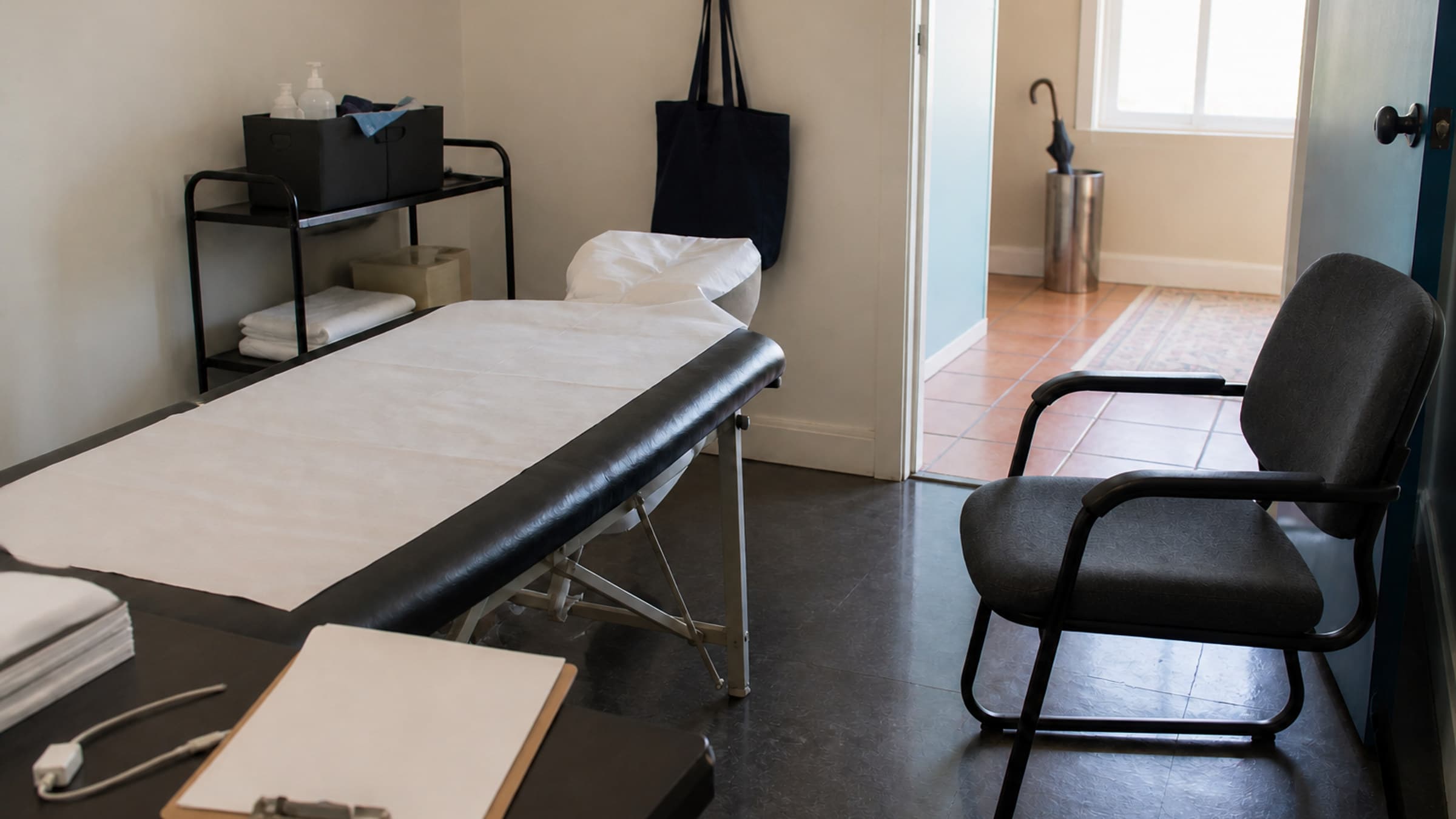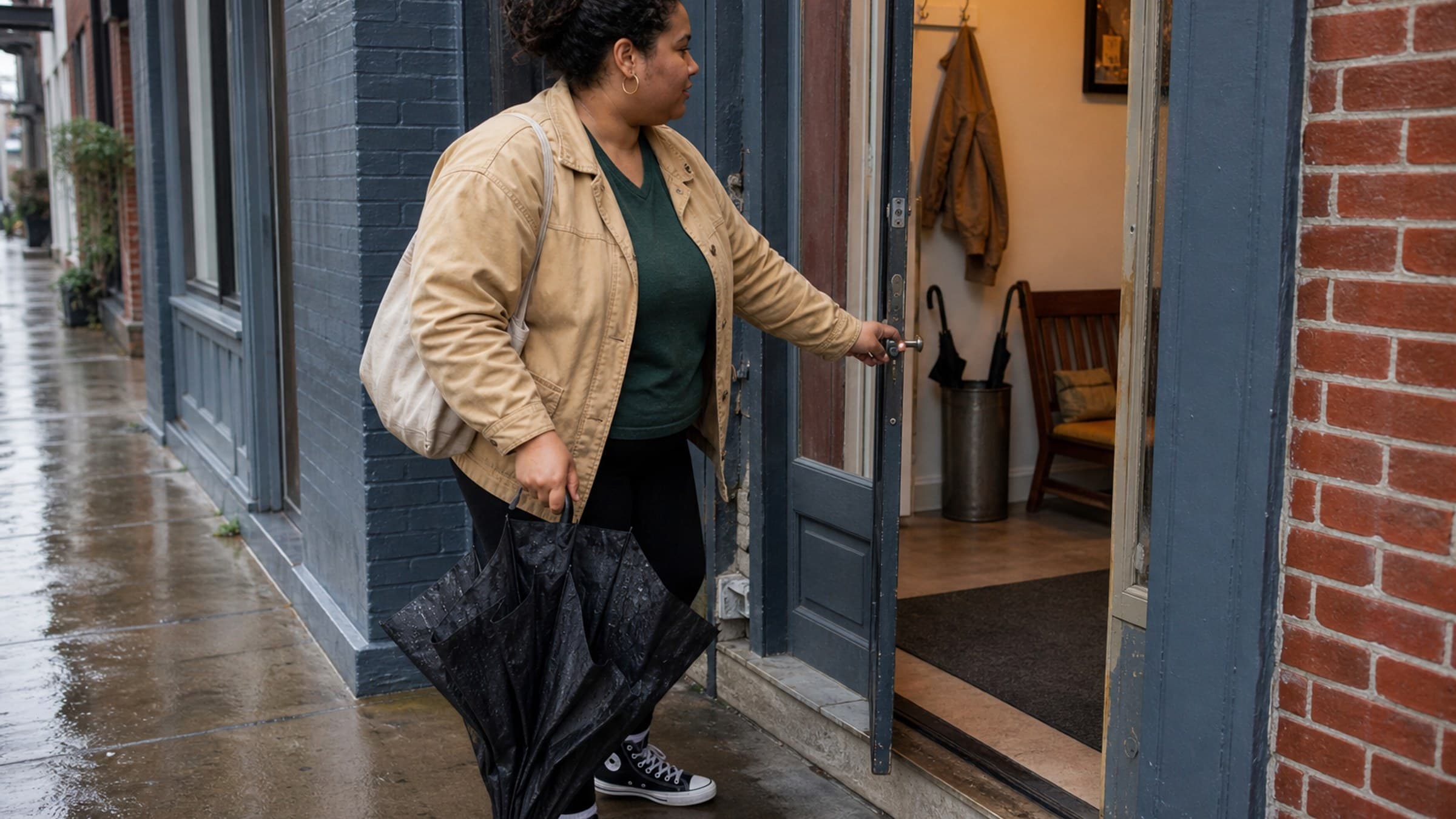

Reframe the first thirty seconds
Before you reach for your phone, do one thing: decide whether you actually want to fill the slot.
This is not a trick question. A spontaneous unbooked hour in the middle of your day is sometimes more valuable than the revenue it represents. A walk, a charting catch-up, a real lunch, a quiet hour to write the email you have been putting off, the chance to actually clean the room properly. If you have been running thin for two weeks, the cancellation might be the thing your week needed.
If you decide to keep the hole, close it visibly. Block the slot in your calendar so a same-day online booking does not sneak in. Then close the laptop and go take the walk. You do not owe the slot to anyone.
If you decide to fill it, set a soft cutoff in your head. Something like, "I will work on this for fifteen minutes, then I am done." A cutoff keeps you from spending the next hour and a half writing increasingly anxious messages to people who were never going to come anyway.
The order to message in
Most practitioners default to messaging the loudest person first: the client they think will say yes, the friend with the flexible schedule, the regular who lives nearby. That is the wrong starting point. The right starting point is the person who is already asking.
Work the list in this order.
First, anyone on a waitlist for that day or that practitioner. People on a waitlist have raised their hand. They have given you permission to reach out. Their yes rate is dramatically higher than anyone else's, and they will not feel pressured because the system is doing exactly what they asked it to do. If your waitlist is empty, that is a separate problem worth fixing once today is over.
Second, anyone who has rescheduled in the last two weeks. They wanted a session. They moved one. They are probably still feeling the gap. A short note offering today's opening is genuinely useful to them, not a sales push.
Third, anyone with a long-standing standing appointment whose next session is more than ten days out. Regulars whose normal cadence has been disrupted are often grateful for a bridge session.
Fourth, and only if the first three rounds came up empty, your wider client list. This is where the desperation creeps in if you are not careful, which is why it is last.
Notice who is not on this list. Friends. Family. Anyone who has not booked with you before. Filling a slot is not a great moment to invite a new dynamic into the practice.
The note itself
The shape of the note matters more than people think. Three rules:
The first rule is that you offer the specific time, not your availability in general. "I have an opening today at eleven" is a yes-or-no question. "Let me know if you want to come in this week" is an essay assignment. People answer yes-or-no questions in seconds. Essay assignments sit in the inbox.
The second rule is that you give a reason without giving the whole story. "A client moved their session" is enough. You do not need to name the client, explain the rescheduling, or apologize for the short notice. The reason makes the offer feel real instead of suspicious.
The third rule is that you make the no easy. The whole message should communicate, in tone, that a no costs them nothing. If you cannot tell whether your note sounds like a friendly heads-up or a guilt trip, read it out loud. If it makes you wince, rewrite it.
A version for the waitlist:
"Hi Sam, a slot opened up today at 11. You are on the waitlist so I wanted to send it your way first. Reply yes and I will hold it for you. No pressure if today does not work, you stay on the list for next time."
A version for a recent reschedule:
"Hi Maya, I had a cancellation come in for 11 this morning if you want to grab it. Saw you moved last week and figured it might be useful. All good either way."
A version for a regular whose next session is far out:
"Hi Dan, a client moved their 11 today. I know your next session is not for two weeks. If you want to come in and bridge it, the room is open. If not, see you on the 24th."
Notice what all three have in common. They are short. They name the time. They give the reason in one clause. They close with a no-cost out. None of them say "please" twice, and none of them say "I would really appreciate it."
What to do if the first round comes up empty
Give it fifteen minutes. If nothing comes back, you have two reasonable moves.
The first move is to broaden the offer to your wider client list, but only if you can do it without sounding like a broadcast. A single well-written email to a small batch of regulars, sent from your own address, lands differently than a group text. If you cannot personalize it enough to feel one-to-one, do not send it.
The second move is to repurpose the slot. Use it for the thing you would normally do at 7pm tonight. A note to the client whose chart you have been meaning to update. The follow-up to the new patient who had a hard first session. Twenty minutes of admin in your treatment room is not a wasted hour. It is the kind of work that often gets pushed to the end of the day and then never happens.
The third move, which is not really a move, is to let it go. The hardest thing about a cancellation is the gap. The second hardest thing is how quickly the gap can become a project. If you have done the right outreach to the right people and the slot is not filling, the slot is not filling. Close the laptop.
Stop fighting the same fire twice
The reason this happens to most practitioners over and over is that the system resets at the end of every day. The waitlist lives in a sticky note, or in your head, or in a thread on your phone you keep meaning to clean up. The next time a cancellation lands, you start from scratch.
Two small habits help.
The first is keeping a real waitlist. Not a mental list, not a "I should remember to call her" list. An actual record of who wants what kind of session, with what practitioner, on what days they are reachable. The list does not need to be fancy. It needs to be the one thing you check before you message anyone else. If your scheduling software offers a waitlist that automatically gets notified when a slot opens, turn it on. The whole point of a waitlist is that the person who raised their hand does not need to be remembered by you in the moment. The system remembers.
The second is a thirty-second post-cancellation note to yourself. Whether the slot filled or not, jot down what you tried, what worked, and how long it took. After three or four cancellations you will know your own pattern. You will know that the email always pulls a yes within ten minutes or it does not pull at all. You will know that texting your Tuesday regulars on a Tuesday morning fills the slot every time and that texting them on a Friday afternoon never does. The pattern is small and personal and worth more than any general advice.
The bigger frame
A cancellation in your calendar is not the same shape as a cancellation in your year. One slot lost out of forty is a rounding error. One slot lost every week, week after week, is a planning question, and it is the one worth your real attention. If your no-show plus same-day cancel rate is climbing, the answer is not faster outreach when a slot opens. The answer is upstream, in your reminder cadence, in how you handle deposits or card-on-file for new clients, in whether your late-cancellation policy is something clients understand the first time they book.
For today, though, the playbook is small. Decide if you want to fill it. Work the list in order. Send three messages that sound like a friend, not a sales pitch. Set a cutoff. If the slot fills, good. If it does not, the room is still warm and your afternoon is still yours.
If you find yourself patching the same hole every week, Stillpoint's built-in waitlist quietly pings the right clients the moment a slot opens, so the slot fills before you have to think about it. The rest of the playbook is still on you. The first part, you can hand off.