
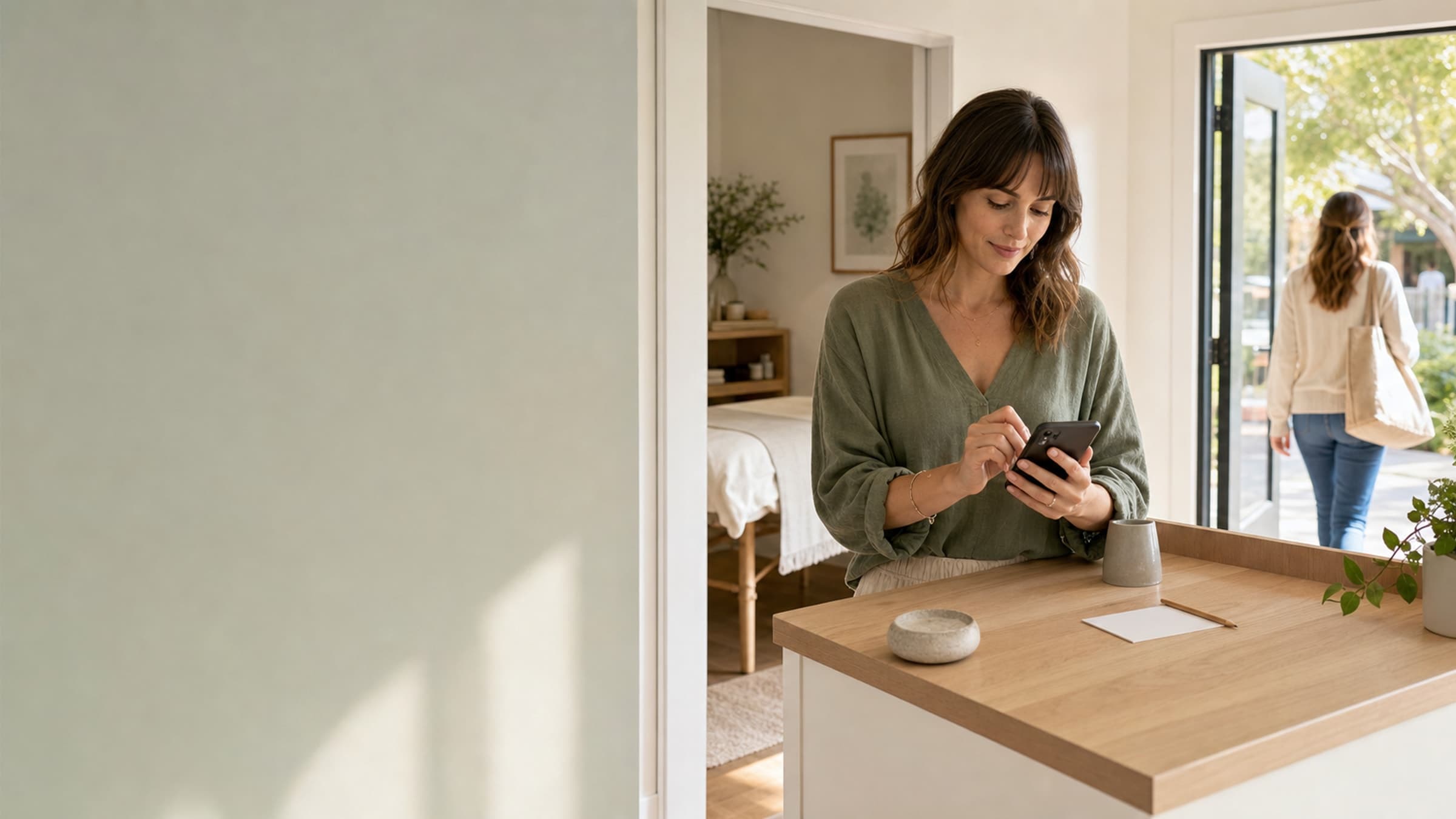
Why Post-Session Communication Matters More Than You Think
Think about the last time you had a great experience with any service provider. Maybe a mechanic who texted you the next day to make sure the car was running smoothly, or a dentist whose office sent a follow-up with specific care instructions. That small gesture probably stuck with you, not because it was elaborate, but because it showed the person was still thinking about you after you left.
The same psychology applies to wellness clients, but the stakes are even higher. Your clients are dealing with their health, their pain, their mental wellbeing. When you reach out after a session, you are communicating something powerful: this relationship does not start and stop at the treatment table.
Research consistently shows that follow-up communication increases client retention rates, improves treatment adherence, and generates more referrals than any marketing campaign. Clients who feel cared for between sessions are significantly more likely to complete their full treatment plans.
The Follow-Up Window: Timing Is Everything
Not all follow-up is created equal. Sending a message three weeks after someone's first visit is not follow-up. It is a reminder that you forgot about them. The timing of your post-session communication matters almost as much as the content.
Within two hours: For new clients or clients who underwent an intensive session, a brief check-in within two hours shows immediate care. Keep it short. Something like a quick note hoping they are feeling well and reminding them to drink plenty of water. This works especially well for bodywork, acupuncture, and any modality where clients might experience soreness or detox symptoms.
Within twenty-four hours: For established clients, the sweet spot is the next morning. A brief message about any home care recommendations you discussed or a note about something specific from their session shows you are paying attention. This is not a generic template. It references something real.
Within forty-eight hours for first-timers: If a new client has not booked their next session, a friendly follow-up within two days is appropriate. Acknowledge their first visit, answer any lingering questions, and gently remind them of the plan you discussed.
What to Say (and What Not to Say)
The biggest mistake practitioners make with follow-up is turning it into a sales pitch. Your client just paid you for a session. The last thing they want is a message that feels like you are trying to extract more money from them.
Do This
Reference something specific from the session. If a massage client mentioned their training for a half marathon, ask how their run went. If a therapy client had a breakthrough, acknowledge the courage that took. Specificity is what separates genuine care from automated marketing.
Provide one actionable takeaway. Instead of a generic wellness tip, give them something tied to their session. A stretch for the area you worked on. A breathing exercise for the anxiety they mentioned. A dietary suggestion connected to the treatment plan. One thing, not five.
Make it easy to reply. End your message in a way that invites a response without demanding one. Something like letting them know they can reach out if anything comes up before the next session. This keeps the door open without creating pressure.
Avoid This
Do not send a review request as your first follow-up. Nothing kills the warm feeling of a great session faster than an immediate ask for a Google review. Wait until a client has seen you several times and expressed genuine satisfaction before making that request.
Do not overwhelm with information. A follow-up is not the place for a three-paragraph essay on fascia or a deep dive into their treatment plan. One or two sentences of genuine care. That is it.
Do not automate everything. A fully templated follow-up that clearly went to every client you saw that day does more harm than good. If you are going to automate, at least include one personalized line that shows you remember them as a person, not just a booking.
Building a Sustainable Follow-Up System
Being thoughtful does not mean being time-consuming. The practitioners who do follow-up well are not spending an hour after each session crafting heartfelt letters. They have a system that makes genuine communication fast and sustainable.
Batch Your Session Notes
After each session, spend sixty seconds jotting down one personal detail and one clinical note. The personal detail might be that the client mentioned their daughter's soccer tournament. The clinical note might be that their left shoulder was tighter than usual. These two notes are the raw material for any follow-up you send.
Use Templates as Starting Points
Create three or four follow-up templates for different scenarios: first visit, regular check-in, intensive session, and missed appointment. Use these as starting points, then personalize the first line with something specific from your session notes. This brings a five-minute task down to about thirty seconds per client.
Pick One Channel and Stick With It
Email, text, or your practice management platform's messaging feature. Pick one and use it consistently. Email automations can handle the routine messages while you focus on personalizing the ones that matter most. Switching between channels confuses clients and makes it harder for you to maintain the habit. For most practitioners, the messaging feature built into your scheduling software is the best choice because it keeps everything in one place.
Set a Realistic Frequency
You do not need to follow up after every single session with every single client. Focus your post-session communication on these situations:
- Every new client after their first three visits
- Clients who are working through a specific treatment plan
- Clients who had a particularly intense or emotional session
- Clients who have not rebooked within their usual interval (a re-engagement strategy can automate this outreach)
For your regulars who come in like clockwork and are clearly happy, a quick note every few sessions is plenty.
The Compound Effect of Consistent Follow-Up
The real power of post-session communication is not in any single message. It is in the pattern. When a client knows that you are going to check in, that you remember what you talked about, that you are thinking about their progress even when they are not in your office, something shifts. They stop thinking of you as a service provider and start thinking of you as part of their care team.
This shift is what turns a client who books when they are in pain into a client who books proactively. It is what makes someone recommend you to their coworker without being asked. It is what keeps your schedule full even when a new practitioner opens up down the street.
The practitioners who struggle with retention often have excellent clinical skills. They are good at what they do in the room. What they are missing is the connective tissue between sessions, the small moments of care that remind a client why they chose you in the first place.
Getting Started This Week
If you have never done post-session follow-up, start small. Pick your three newest clients and send each of them a brief, personalized message tomorrow morning. Reference something from their last session. Offer one piece of useful advice. Keep it under four sentences.
Notice how it feels and how they respond. Most practitioners who try this are surprised by two things. First, how little time it actually takes. And second, how much their clients appreciate it. That appreciation translates directly into loyalty, referrals, and a practice that grows because people genuinely want to come back.
The best marketing you will ever do is not a social media campaign or a discount offer. It is the message that arrives when a client least expects it but most needs to feel seen.