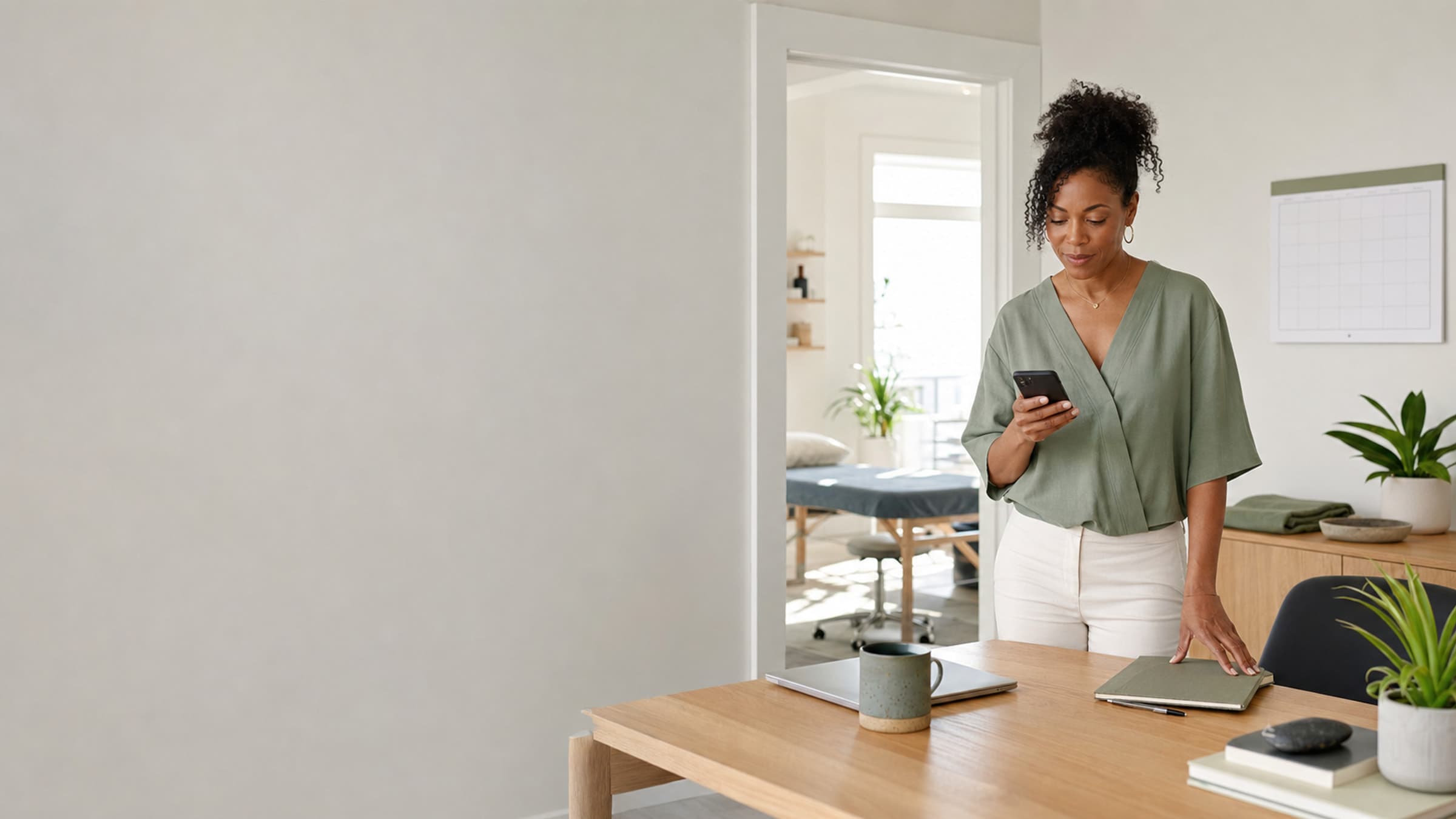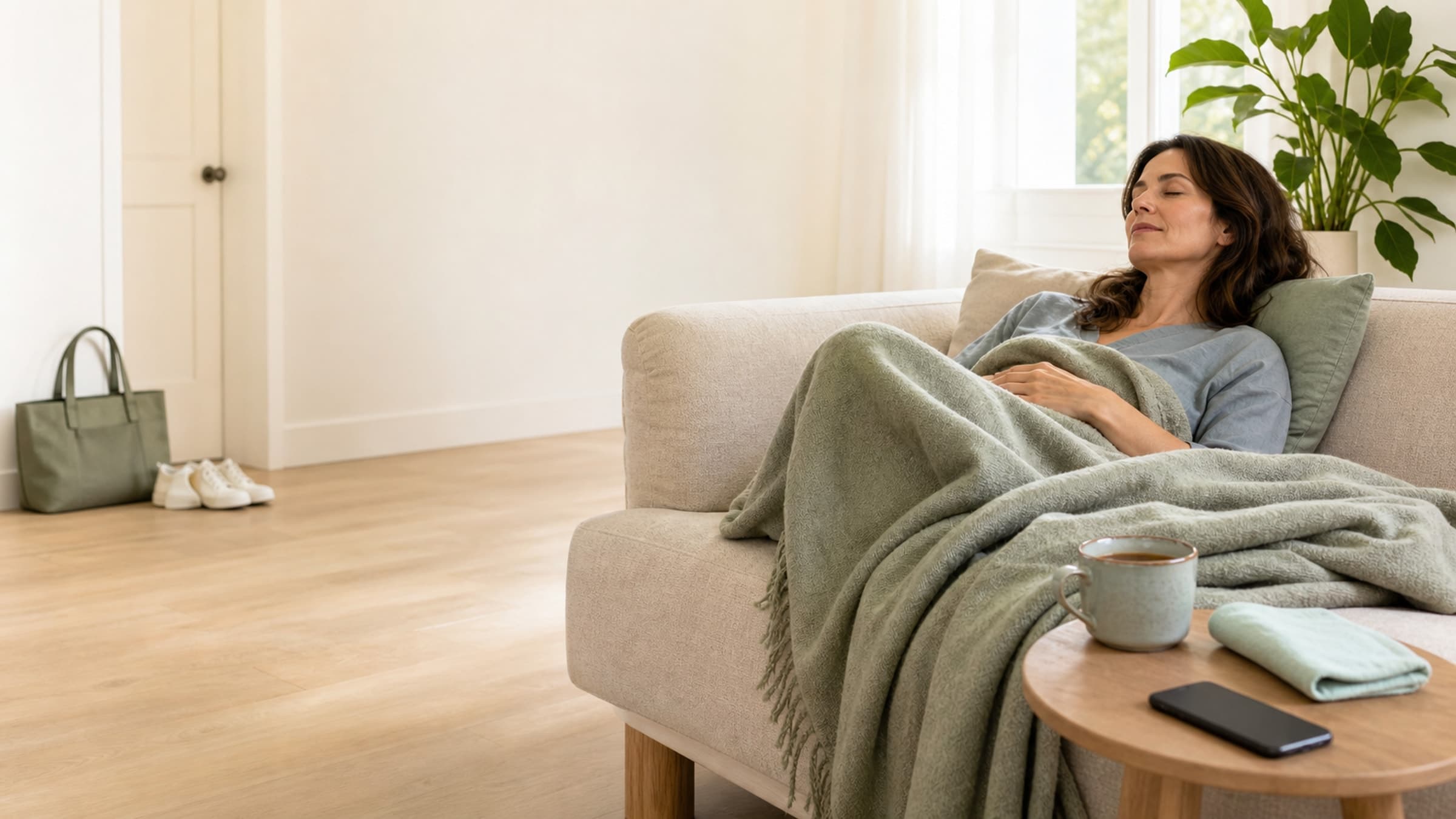

First, decide whether to reply tonight
When a client text comes in after hours, the move is almost never to fire back immediately. A fast reply at 9:14 p.m. teaches the client that 9:14 p.m. is a reasonable time to expect a response from you. The next time they have a thought, they will text without thinking about the hour, because you set the precedent.
Three categories cover almost every after-hours message:
True emergency. Acute symptoms after a session, a safeguarding concern, anything where waiting until morning could cause harm. Reply. Briefly, calmly, and route them to the appropriate next step (urgent care, ER, the on-call line if you have one). This is rare.
Logistics. Reschedules, cancellations, payment questions, "did you get my form?" These do not need a reply tonight. Most of them do not need a personal reply at all. They need a system that the client can self-serve.
Care-adjacent. "Is this soreness normal?" "Should I keep icing?" "Can I take this supplement with my medication?" These feel urgent because the client is in their body asking a question about it, but they are not actually emergencies, and they often deserve a real answer, not a thumbed-out text between commercials. The honest move is to wait until morning when you can answer well.
For the second two categories, the right reply time is whenever your workday starts the next morning. Not 11 p.m. when you finally remember. Not 6 a.m. when you happen to be up. The first hour of your normal workday is the signal you want to send.
The reply that resets the channel
A single message can quietly retrain a client without lecturing them. The trick is to answer their question warmly, and then route the next one. Not the current one. The next one.
Imagine a client texts at 9:14 p.m. asking to move Thursday to next week. The on-the-spot reply most practitioners write is, "no problem, what time next week works?" That reply solves the logistical problem and reinforces the channel. Now they know texts after hours get same-night service.
A better reply, sent the next morning at 8:30 a.m.:
Hi Sam, no problem on Thursday. I just sent you a link to pick a new time. For future reschedules you can also use that same booking page to move things around any time, no need to text. Talk soon.
Notice what this does. It solves the immediate problem. It hands them a self-serve tool. It does not scold. It does not say "please do not text me after hours." It just quietly opens a door that is more convenient than the one they were using.
After two or three of these, most clients will drift onto the self-serve channel without ever having a conversation about it. They were texting because it was the path of least resistance. Give them a path with less resistance, and they will take it.
A short menu of channels, written down somewhere
The deeper version of this fix is to give clients a one-screen map of how to reach you for different things. Most practices do not have this written down anywhere. The client improvises, defaults to whatever channel they used to book (often a text), and you end up handling every category of question through the same firehose.
A simple menu, sent in the welcome email and posted on the contact page, might look like:
- To book, reschedule, or cancel. Use this link: book.yourpractice.com. Self-serve, twenty-four-seven.
- For billing or invoice questions. Email billing@yourpractice.com or reply to the invoice email.
- For questions about your care. Use the message thread inside your client portal. I check it once on weekday mornings and again in the late afternoon.
- For genuine urgent health concerns after hours. Please call your doctor, urgent care, or 911. I am not on call outside of session hours.
The last line is the one that most practitioners hesitate to write, and the one that matters most. It is not unkind. It is clear. A client who reads "I am not on call" before they have a question never feels rebuffed when they get the same answer in a moment of small worry. They feel oriented.
The reschedule problem is a settings problem
A huge share of after-hours texts are reschedule requests. The client is laying in bed, remembering that Thursday will not work, and the only thing they know how to do is text you. This is a settings problem, not a communication problem.
Two changes solve most of it:
Let clients reschedule themselves. Your booking flow should allow a client to move their own appointment within whatever window you are comfortable with (most practices use 24 or 48 hours). When that is in place, the 9 p.m. reschedule text stops happening because the client has a faster option.
Include the reschedule link in every reminder. A 48-hour reminder that ends with "if this time no longer works, reschedule here" catches the exact moment when someone is most likely to need it. They get the reminder, they look at their week, they realize Thursday will not work, and they handle it themselves. You never see the text because it never gets sent.
If you cannot do these because of a tool you are using, that is a sign the tool is costing you more than it saves you.
Care-adjacent questions need a different channel, not a faster one
The "is this soreness normal" texts are trickier, because they feel like they belong to your relationship with the client. They do. But texting at 9 p.m. is the wrong shape for that conversation. The client cannot give you good context in a text. You cannot give them a careful answer in a text. And the channel itself encourages a fast, casual exchange about something that often deserves a slower one.
A good move is to consolidate care-adjacent questions into a single threaded channel inside the client portal or your practice software. The client sees that you check it on a schedule. You respond there with the same warmth, but with the benefit of being on the clock, with their chart open, and with time to write a real answer.
You can even encourage this gently in the moment, when an after-hours care text comes in. The next morning:
Hi Sam, the soreness you are describing is usually a normal response to that kind of work, but I want to ask a couple of follow-ups before I say more. I started a thread in your portal so we can keep this in one place. Take a look when you get a chance.
You answered. You moved the conversation. You did not say "please stop texting me." And next time, they will write you in the portal first.
A note on your own answer time
The version of this problem that is hardest to fix is the one where you, the practitioner, cannot leave a message sitting. The text comes in, you see it, and even if you do not reply, you are now thinking about it. The evening is partially gone.
Two small habits help. The first is to keep your work phone, work texts, and work email out of your personal phone whenever you can. This is harder than it sounds, because most solo practitioners booked their first clients on a personal number and the number stuck. If you have not moved, it is worth the small migration to a dedicated line, a separate inbox, or at minimum a Do Not Disturb schedule that hides work pings from 6 p.m. to 8 a.m.
The second is to give yourself permission to not see something until morning. If you do see a message in the evening, the rule is: read it, decide which of the three categories above it falls in, and only act if it is a true emergency. Everything else gets a calm reply at 8:30 a.m. the next day. The discomfort of leaving a message unread is real, and it fades quickly when you experience how much better an actual evening feels.
If you want clients to reschedule themselves, see your reminder messages, and route their questions through a single tidy thread instead of your phone, Stillpoint has those pieces built in. None of this will turn a practice into a 9-to-5 job. It will give you back most of your evenings, which is what you were trying to protect in the first place.