
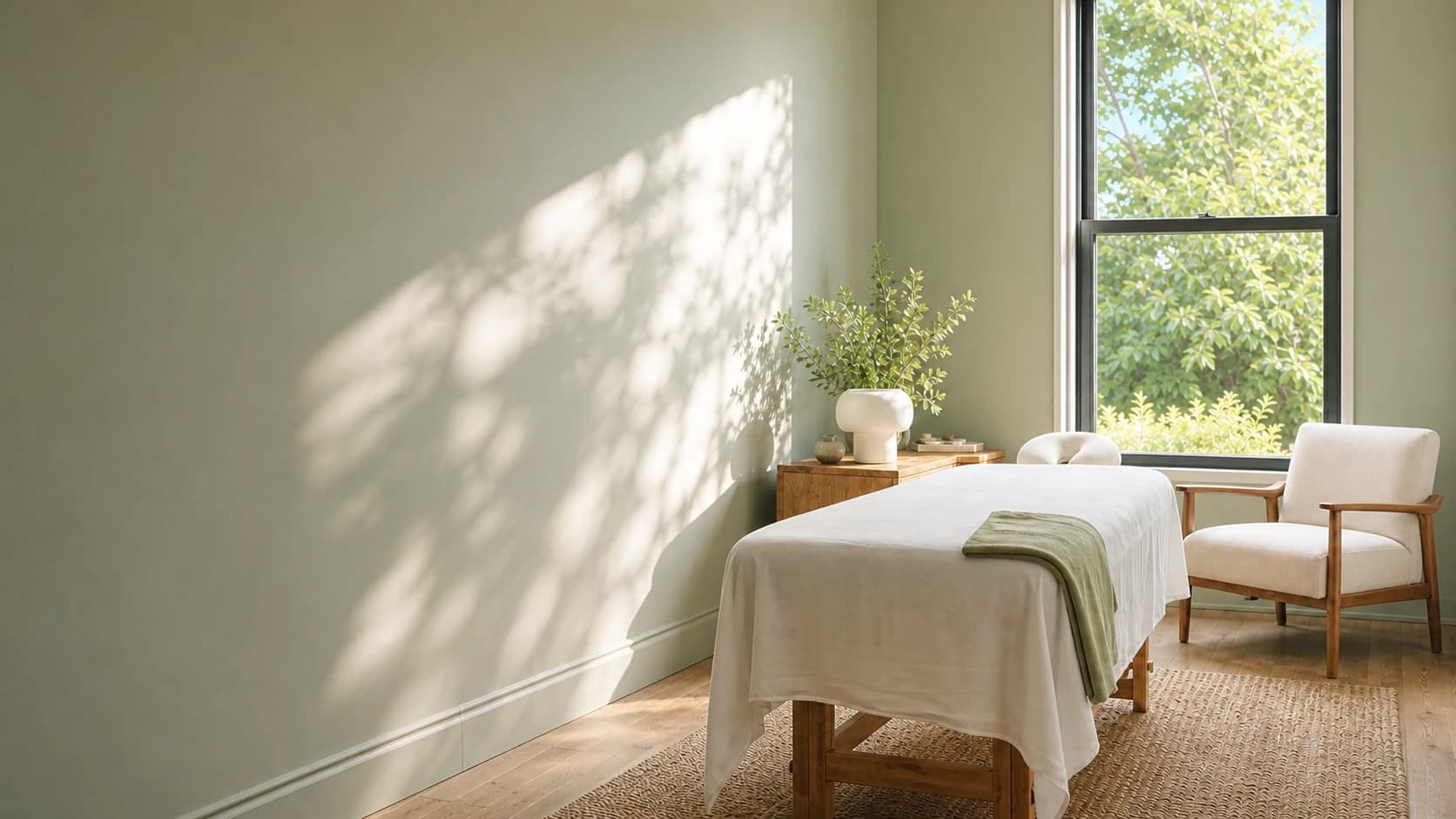
If your practice has more than one place (an office downtown and an office on the east side), or you offer a mix of in-person, virtual, and mobile sessions, Locations is where you set them up. Each location has its own address, contact details, and hours, and every appointment is tagged with where (or how) it happens.
Multiple locations are available on Professional, and practices already on Starter keep them. Existing practices with grandfathered access keep their locations. Single-location practices can manage their existing location and change its type.
Three location types
When you create a location, you pick a type:
- In-person. A physical address clients come to. Address is required and shown on confirmations.
- Virtual. A telehealth modality. Clients receive a video link in confirmations and reminders instead of an address. See Virtual Locations.
- Mobile. You travel to the client (in-home, workplace wellness, event coverage). No physical address; instead, you provide travel instructions clients see when they book.
Create a location
- Open Locations in the sidebar.
- Click Add Location.
- Pick a type.
- Fill in the relevant fields:
- Name clients recognize (e.g., "Downtown Office," "Online (Google Meet)," "In-Home Visits").
- Address for in-person locations.
- Meeting platform and link for virtual locations.
- Travel or meeting instructions as needed.
- Phone and email specific to this location.
- Set the hours of operation.
- Click Save.
Locations in the booking flow
When a client books, the locations they see are filtered to:
- Locations where the chosen practitioner is assigned (see Practitioner-Location Assignments).
- Locations where the chosen service is offered.
- Locations with active hours and matching availability.
In-person locations show their address. Virtual and mobile locations show their instructions instead.
Day-to-day
- Edit any location to update details, hours, or instructions.
- Deactivate a location to hide it from the booking page without deleting it.
- Add as many locations as you need; each one has its own type.
Rooms
Within a location, you can also set up rooms for resource scheduling (treatment room A, treatment room B). Rooms are available on Professional, and practices already on Starter keep them. Useful when two practitioners share one office and you want to prevent overlapping bookings.
Tips
- Keep hours current, especially around holidays and seasonal changes.
- Use a virtual location for telehealth so you can track those sessions separately in reporting.
- For mobile work, use the instructions field to set expectations: parking, what to have ready, what you'll bring.