Decide what early actually means in your practice
Before you write a policy, look at the room you really have.
If you have a staffed reception area, arriving ten or fifteen minutes early may cause no problem at all. If you work alone behind a locked door, share a treatment room, or have no waiting area, five minutes may be the earliest arrival you can comfortably receive. For a virtual appointment, joining the call ten minutes early might simply mean sitting in a waiting screen.
Pick a number that fits your actual setup. Do not borrow a rule from a larger clinic with a receptionist and six chairs if your practice is one room at the end of a quiet hallway.
Then decide what happens before that time. Perhaps the door stays locked. Perhaps a small sign asks clients to wait outside until five minutes before their appointment. Perhaps the booking message tells them there is no indoor waiting area and points them to a nearby bench or cafe. The best boundary is the one that does not require you to make a fresh decision every time someone arrives.
Tell clients before they have to guess
Most early arrivals are not boundary problems. They are information problems.
A client does not know that you use the gap before their session to finish confidential notes. They do not know the previous client may still be leaving. They do not know that the front door being locked is intentional. Without clear instructions, they have to guess, and conscientious people often guess that earlier is safer.
Put one plain sentence in the booking confirmation and reminder:
"Please arrive no more than five minutes before your appointment, as there is no waiting area inside."
If the entrance is confusing, add the useful detail right after it:
"The door may be locked while I am with another client. I will open it five minutes before your appointment."
That is enough. You do not need a paragraph about privacy, your lunch break, or the cost of running late. Give the instruction, explain what they will encounter, and remove the uncertainty.
Do not start the session just because they are there
When someone arrives early and you happen to be free, it can feel efficient to begin. Once in a while, that may be fine. Repeating it creates a quiet expectation that the appointment starts whenever the client appears.
It also hides the real cost of the early arrival. The ten minutes you gave away may have been the time you needed to review their file, use the bathroom, return a call, or simply stop being available for a moment. That space is part of your working day even though nobody pays for it directly.
You can greet them warmly without beginning:
"Hi, you're early. I'm glad you found the place. I still need a few minutes to get the room ready, so make yourself comfortable and I'll come get you at two."
If there is nowhere to wait, be just as direct:
"Hi, I am still finishing up from the last appointment and cannot open the room yet. I will be ready for you at five to two."
The kindness is in the tone. The boundary is in the time.
Protect the privacy of the client before them
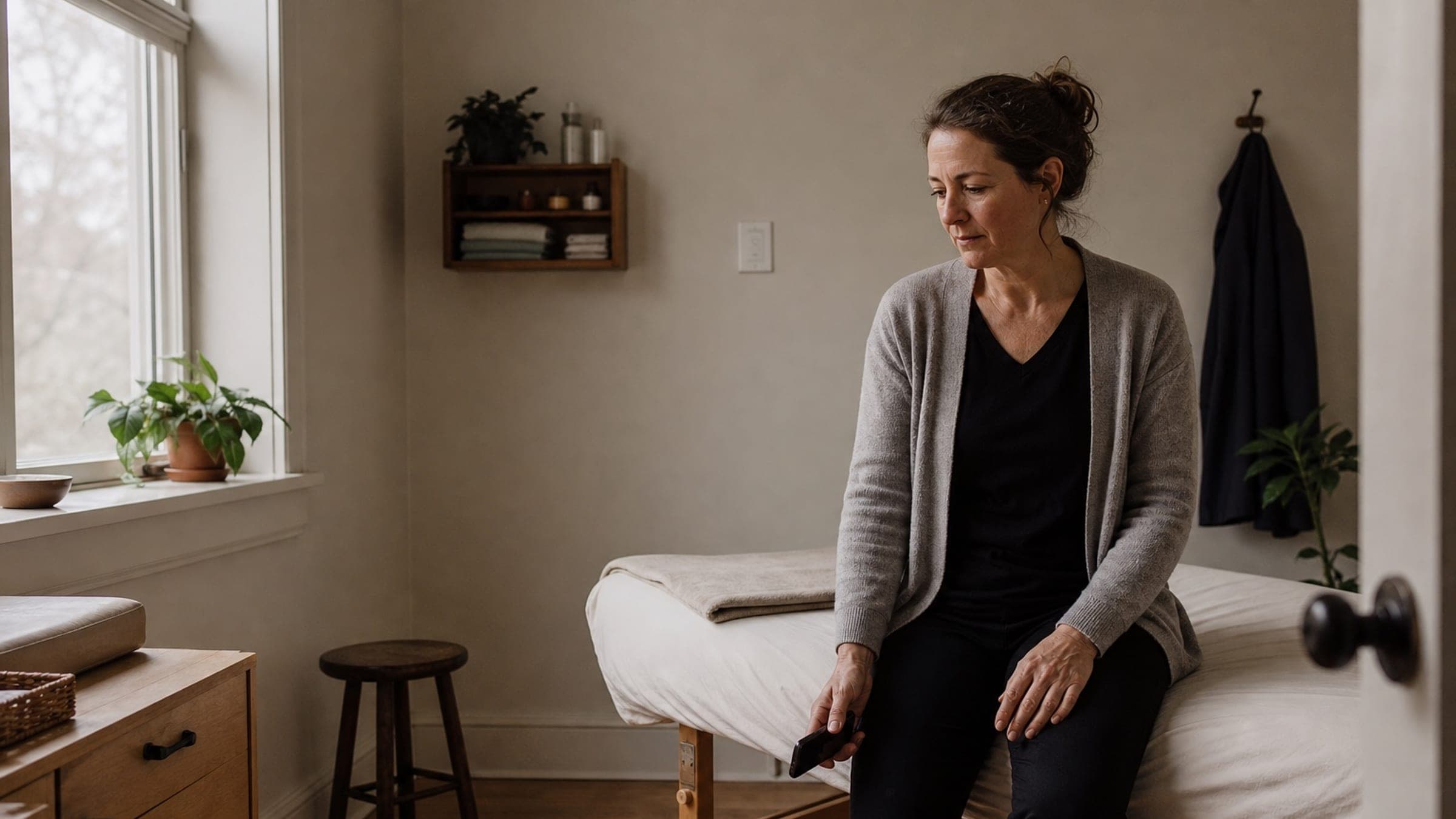
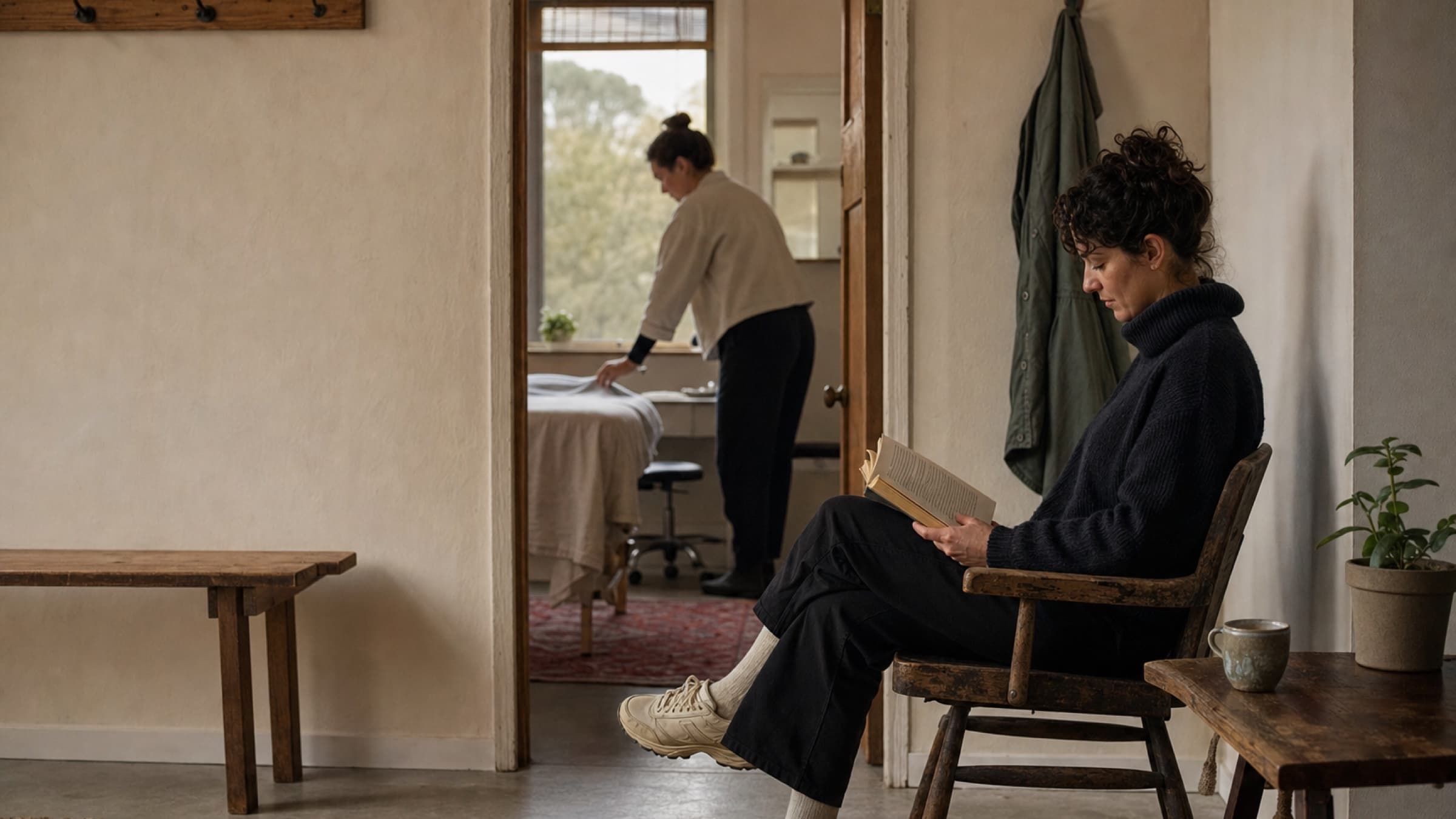
In a small practice, early arrivals can create more than inconvenience. One client may hear the end of another conversation, see someone leaving the treatment room, or notice a name on a document you have not yet put away.
You do not need to explain those details to the person at the door. You do need to design around them. Keep the door closed until the previous client has left. Allow enough space between appointments for one person to exit before the next enters. Put paperwork away before opening a shared room. If the hallway itself is too exposed, make the arrival window especially clear.
Privacy is a good reason not to make exceptions on the spot. "Come in, but just sit quietly while I finish" may feel hospitable, yet it can place both clients in an awkward situation. A calm five-minute wait outside is often kinder than an early welcome into a room that is not ready.
Handle the repeat early arrival without a lecture
Some people will keep arriving early even after the reminder is clear. They may be relying on a bus schedule, getting a ride, or managing anxiety by leaving a large cushion. You can be curious about the reason without making their timing your responsibility.
Try a short conversation at the end of the session:
"I have noticed you often get here about twenty minutes early. I cannot let anyone in until five minutes before because I use that time between clients. Is there somewhere nearby that would be comfortable for you to wait?"
This names the pattern, states the limit, and leaves room for a practical answer. Maybe they need to know where the library is. Maybe they would rather book the first appointment of the day. Maybe the current time simply does not work with their transportation. A specific problem is easier to solve than a vague feeling that they are doing something wrong.
If nothing can change, the boundary still holds. They can arrive early, and you can remain unavailable until the agreed arrival time.
Keep the welcome, lose the scramble
You want clients to feel expected. That does not mean you must be ready whenever they appear. A good welcome comes from opening the door calmly, knowing who you are about to see, and having the room prepared. Giving away the few minutes that make those things possible does not create more care. It usually creates less.
Choose the earliest arrival time your space can support. Put it in the messages clients already receive. Keep the door closed until you are ready. If someone repeatedly arrives early, talk about the practical reason instead of treating it as a character flaw.
The goal is simple: they should know exactly when they are welcome, and you should not have to scramble to prove it.
If you want that expectation to reach every client without another manual message, Stillpoint's email templates let you add arrival and parking details to confirmations and appointment reminders, so the boundary is clear before anyone reaches your door.