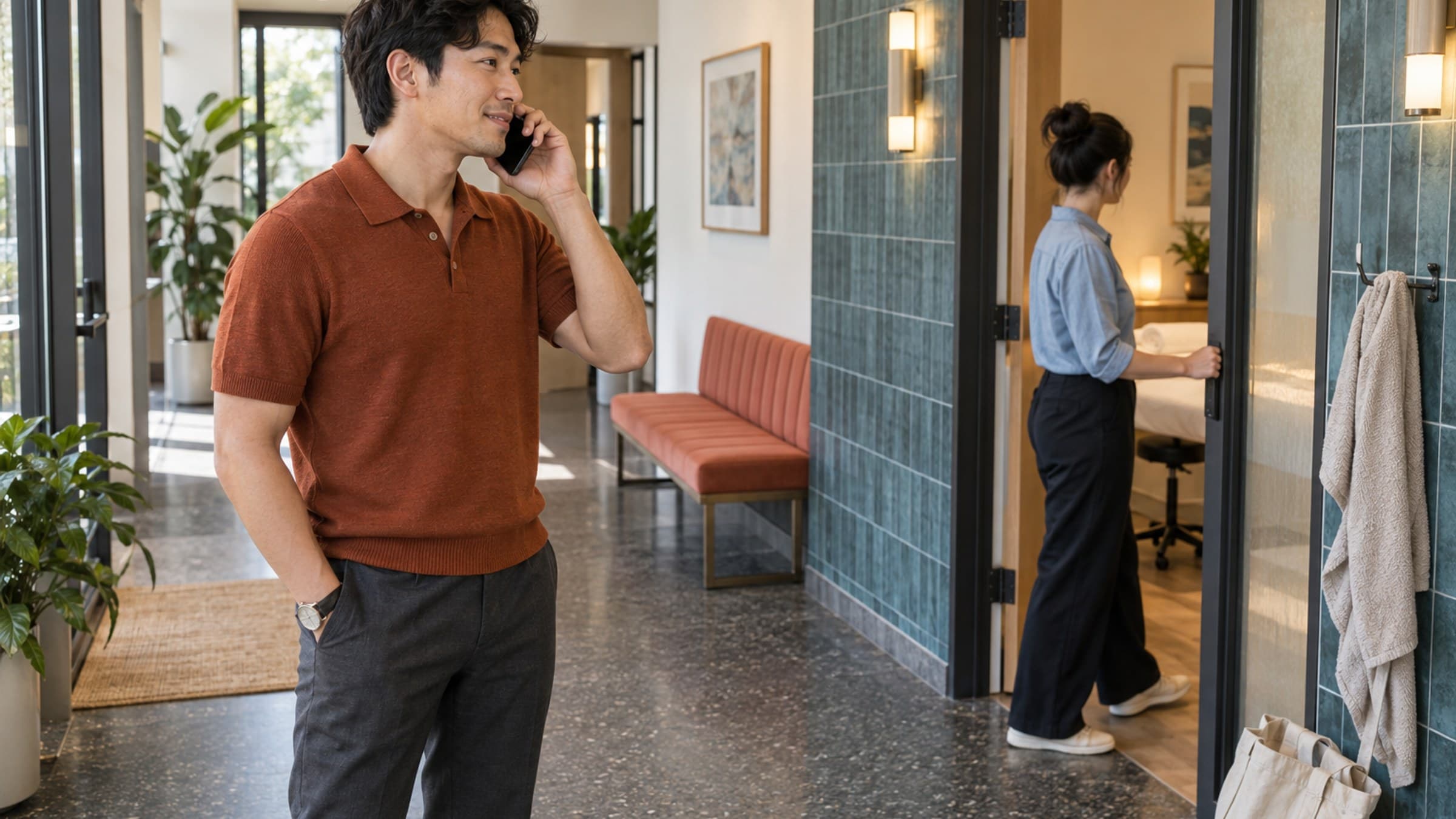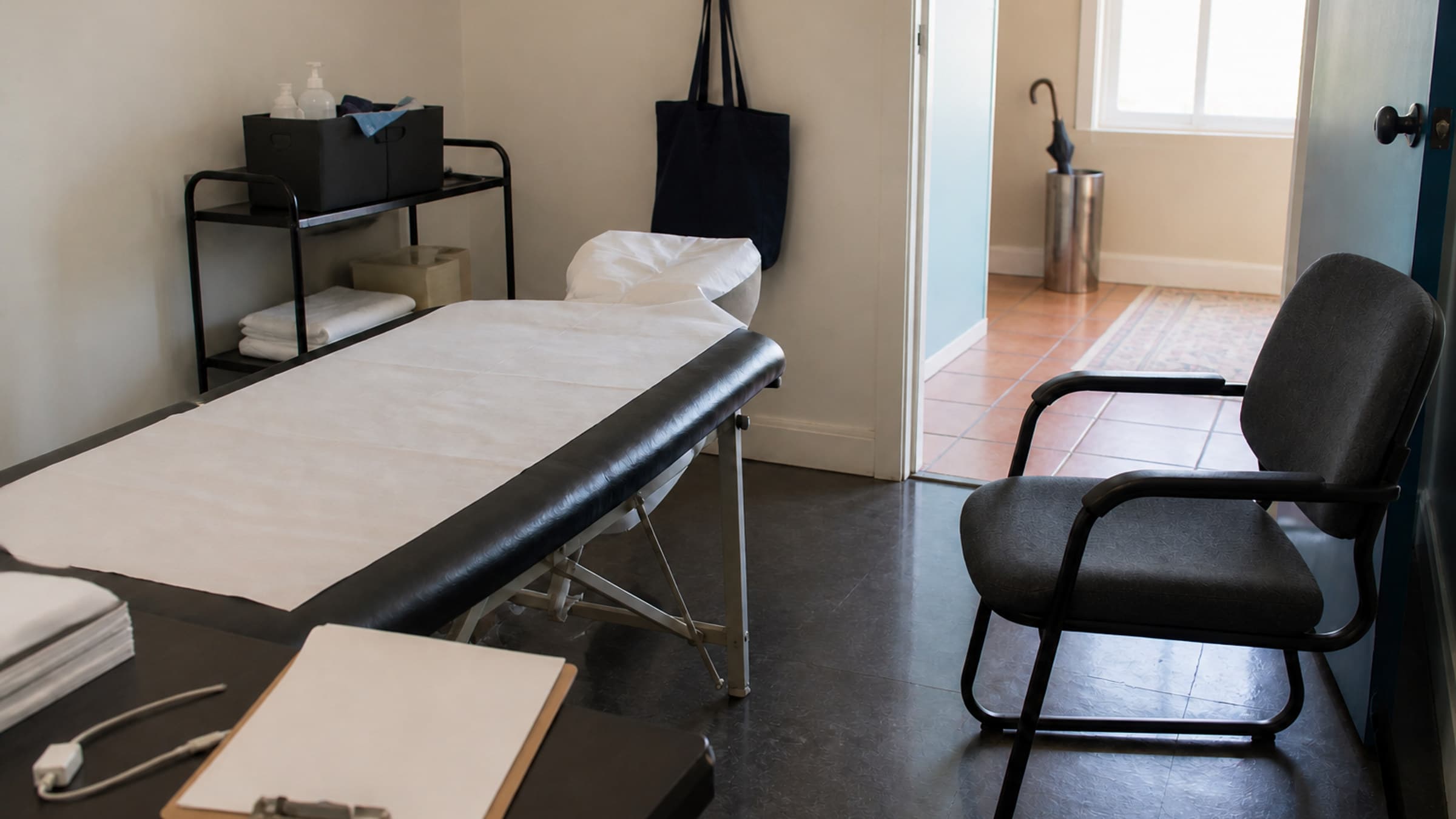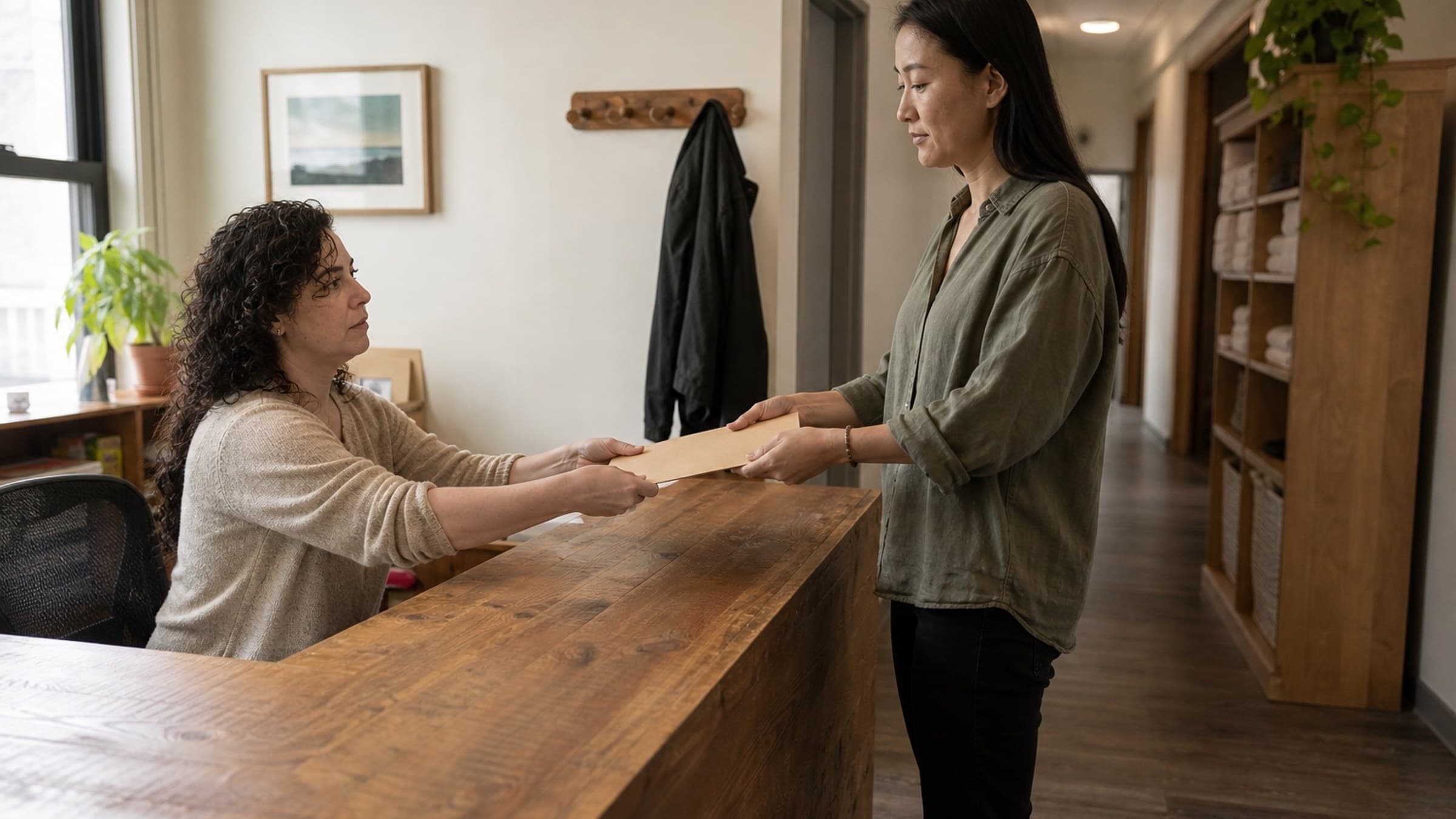
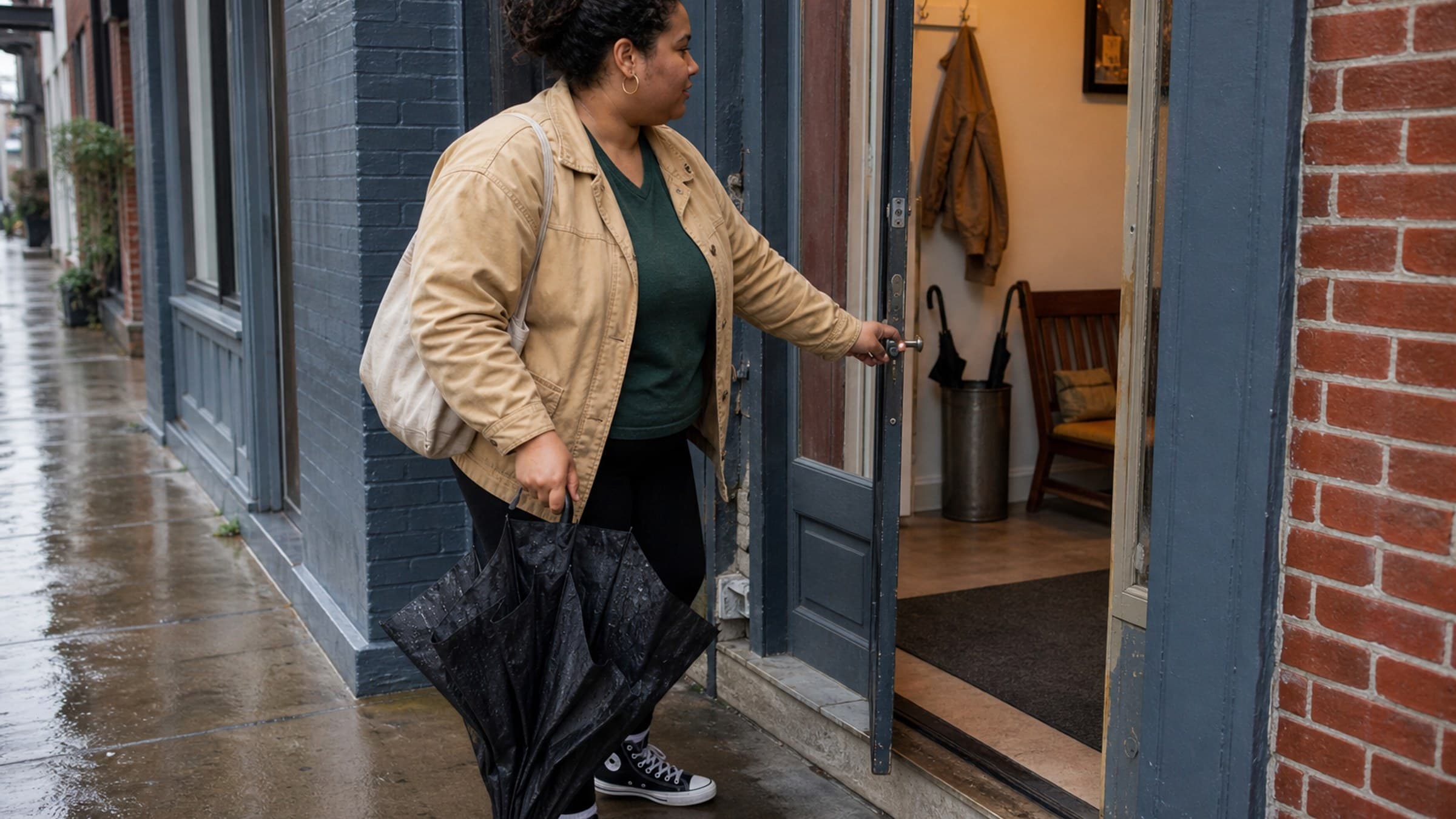
Walk the route as if you have never been there
Start outside the building, not at your treatment-room door.
Approach from the sidewalk, parking area, transit stop, or shared lobby that most clients will use. Notice what becomes visible in order. The building number may be clear from one direction and hidden from another. The main entrance may lead to a different business. A sign that feels prominent from inside may disappear behind a tree, parked vehicle, or open door.
Keep going until you reach the place where a client knows they can stop looking. That may be a reception desk, a waiting chair, or a clearly marked door.
Write down each decision point:
- Which entrance should they use?
- Is there a floor, unit, or room number?
- Is the entrance locked at certain hours?
- Is there a buzzer or intercom?
- Where should they wait?
- Who should they contact if the door does not open?
You are not writing a tour of the building. You are finding the moments where a reasonable person could choose the wrong path.
Lead with the landmark that confirms they are in the right place
An address gets someone to a property. A landmark helps them recognize the correct arrival point.
Choose one stable, ordinary feature that will still be there next month. It could be the entrance beside the pharmacy, the blue awning on the east side, the second-floor reception desk, or the glass door inside the courtyard.
Avoid landmarks that move or change often. A parked van, a seasonal planter, or a neighbouring shop's sandwich board may be helpful today and confusing tomorrow.
A clear first sentence might be:
Use the courtyard entrance beside the pharmacy, then take the elevator to the second floor.
That sentence does more work than "We are located at 214 Cedar Street, Suite 204" because it explains what the client should do when they reach the address.
Put access details before comfort details
Clients need to know about barriers before they need to know what the waiting room is like.
If the usual route includes stairs, a heavy door, a narrow hallway, paid parking, or a building that locks early, say so plainly. If there is an accessible entrance, elevator, step-free route, or place to be dropped off, explain how to reach it without making the client request special treatment just to find the door.
Be specific about what you know. "Step-free entrance on the west side" is useful. "Fully accessible" is a broad promise that may not account for doorway width, washrooms, seating, scent, sound, or other needs.
Give clients a simple way to ask about the route before the appointment. You do not need to anticipate every need in one message. You do need to make it easy for someone to check whether the space will work for them.
Explain what happens when they arrive early
Many wellness practices do not have a staffed reception desk. That is normal, but a new client may not know whether an empty waiting area means they should sit down, knock, call, or leave.
Tell them what to do in one sentence:
If you arrive early, please take a seat in the upstairs waiting area. Your practitioner will meet you there at your appointment time.
If the door stays locked until shortly before the appointment, say that too. A client should not have to wonder whether they have the wrong entrance because nobody answered ten minutes early.
Keep the boundary honest. Do not ask clients to arrive fifteen minutes early if there is nowhere comfortable to wait. Do not promise that someone will greet them immediately if the practitioner is usually finishing the previous session.
Write for the rainy, dark, or busy version of the trip
Instructions often get written after a calm daytime walk. Appointments also happen when the sign is harder to see, the courtyard gate is closed, snow covers the curb, or the parking lot is full.
Think about the conditions that regularly change the last part of the route:
- evening building access;
- weekend door or elevator rules;
- street cleaning, market days, or school traffic;
- winter snow and ice;
- heavy rain and covered waiting space;
- construction that changes the usual entrance; or
- a shared lot with restricted stalls.
Keep permanent instructions short, then add temporary guidance only while it is needed. A construction note that remains in your confirmation email six months after the scaffolding comes down makes every other detail look less trustworthy.
Use one short block in the confirmation
Arrival guidance is easiest to use when it sits beside the date, time, and location the client is already checking.
Aim for three parts:
- The entrance or landmark
- The final route inside
- What to do if access fails
For example:
Enter through the courtyard door beside the pharmacy and take the elevator to Floor 2. Please wait in the seating area outside Suite 204. If the exterior door is locked, call the practice at [phone number].
Do not bury this below a long welcome message, policy reminder, or list of preparation instructions. Put the route where a client can scan it while standing outside.
Keep clinical and personal details out of the directions. The arrival block should be safe to read on a phone in public. Anything specific to the client's care belongs in the appropriate private channel.
Give changing details one clear owner
Arrival instructions become unreliable when everyone assumes someone else updated them.
Choose one owner for the client-facing route. That person may be the practice owner, operations lead, or front-desk coordinator. Their job is not to walk the route every morning. It is to update the instructions when the building changes.
Review them when you:
- move rooms or locations;
- change your building hours;
- add an evening or weekend schedule;
- receive repeated calls from the same decision point;
- learn that an access route is unavailable; or
- change the phone number clients use at arrival.
Treat every "I could not find you" call as useful evidence. Ask where the client was standing and what they could see. Then fix the sentence that failed at that point.
Test the message on a phone
Send the final confirmation to yourself and open it on a phone. Do not review only the editing screen.
Check whether the arrival block appears without expanding hidden text. Tap the phone number if you included one. Confirm that the address and unit match the location attached to the booking. Read the instructions from outside the building and follow them exactly as written.
If your practice has more than one location, test each one separately. Generic instructions such as "use the side entrance" become dangerous when two addresses have different side doors.
The best version is usually shorter after the test. Once the route is clear, remove the extra explanation that does not help the client take the next step.
Stillpoint sends booking confirmations with the appointment date, time, and location. Its email template tools also let you add and preview pre-session instructions, so a short arrival block can reach each client without a separate message. Automated reminders can repeat the essentials before the appointment. The goal is simple: let the client spend their attention on arriving, not on solving your building.