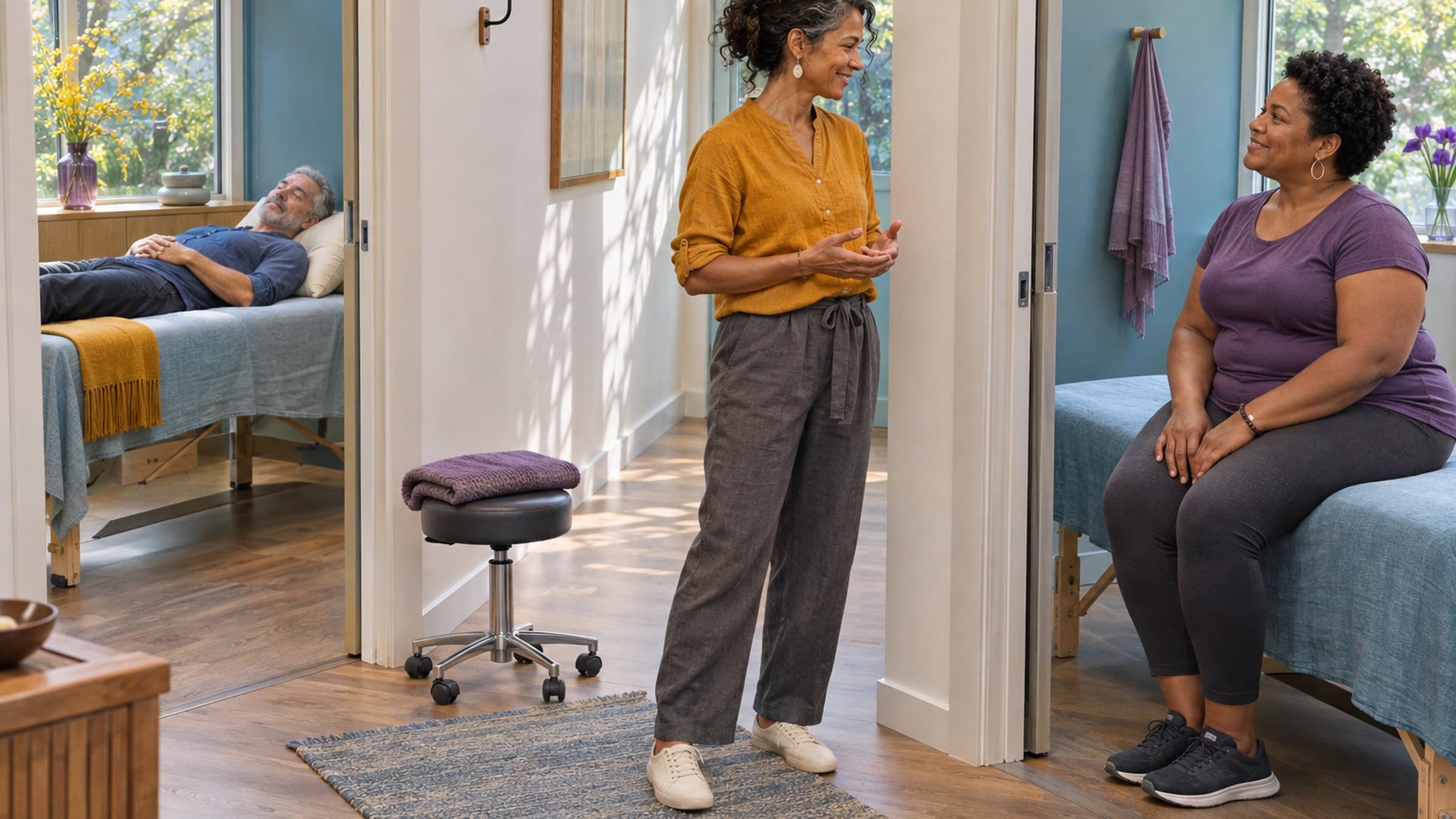
If you work without a receptionist, clients often arrive to a quiet room and wonder whether anyone knows they are there. A simple check-in plan answers that before they have to knock.
A quiet waiting room is restful when clients know they are expected. Without that, it just feels empty.
Picture it from the other side of the door. A client arrives ten minutes early, the way you asked. The waiting area is quiet. There is no desk, no bell, no one to tell. Your treatment room door is closed and they can hear a low voice behind it.
So they wait and wonder. Are they in the right place? Do you know they are here? Should they knock? Some sit and scroll. Some text you, and your phone buzzes in a pocket during someone else's session. A few knock, which is the one thing you most hoped they would not do.
None of this is the client's fault. They are filling a gap you left open. A small, deliberate check-in plan closes it, and it costs very little to set up.
Decide what an arriving client needs to know
Before you write a sign or change anything, list the questions a client has in the first minute after they walk in. For most practices, there are four:
Am I in the right place?
Do they know I am here?
Where should I wait?
What happens next, and when?
If your waiting area answers all four without the client having to ask anyone, you have done most of the work. If it answers none, every client is improvising, and improvising usually means interrupting.
Notice that only one of those questions is about checking in. The others are about reassurance. A good arrival plan does both.
Put the welcome where clients actually pause
Clients do not read a room. They glance at it. The first place their eyes land after they step inside is where your welcome belongs.
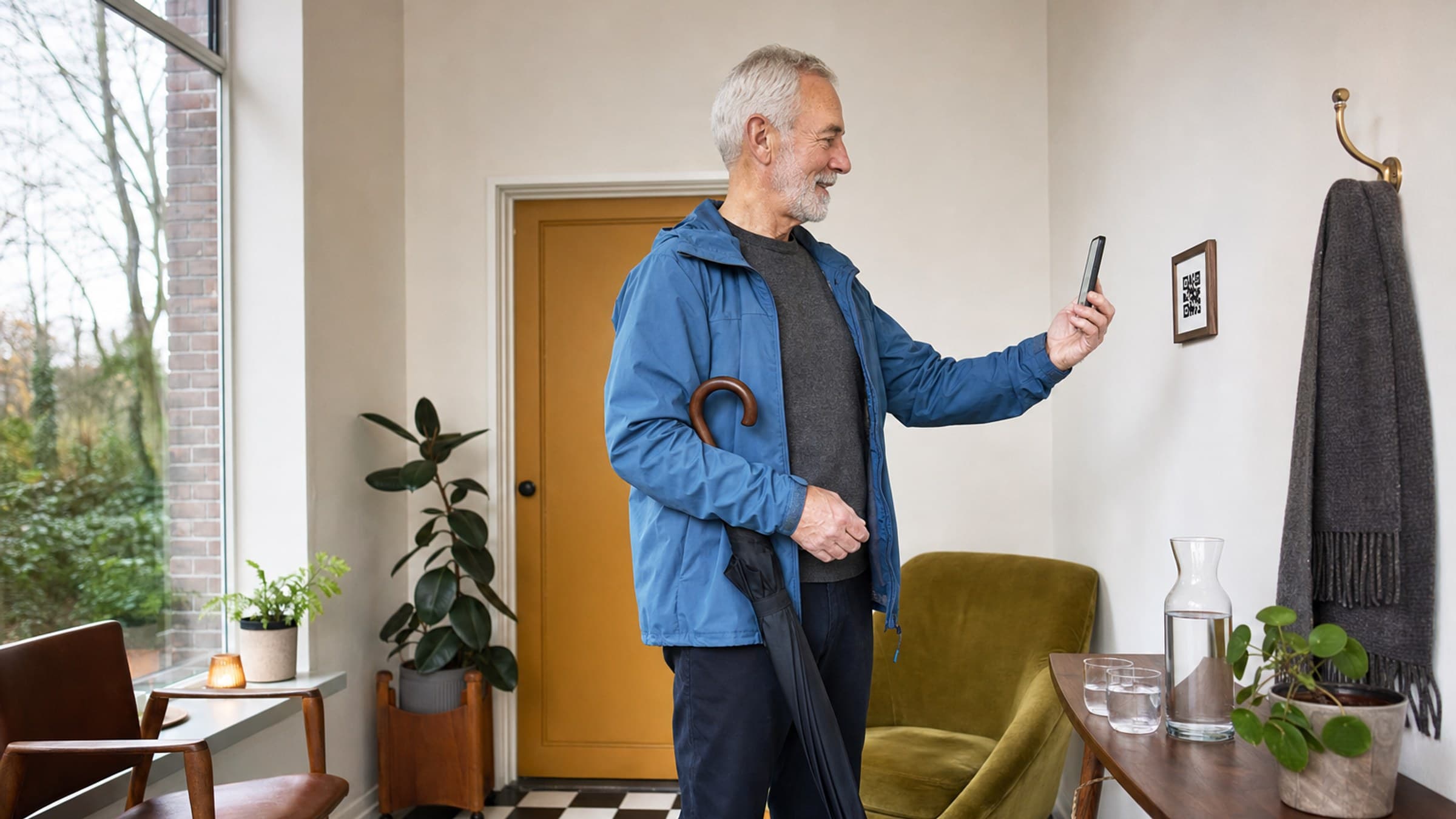
Stand in your doorway and look. Where does your gaze go first? Usually it is straight ahead at eye height, or to the nearest chair. That is where a small sign or card should sit. A notice taped low beside the coat hooks will be missed by half your clients. One framed at eye level next to the chairs will be read by nearly all of them.
If you share a hallway or a building entrance with other businesses, think about the step before your door too. A client who has to guess which door is yours arrives already a little flustered. A plain card with your practice name at the right door solves that.
Write one short sign, not five
Many shared spaces collect notices over time. Please remove shoes. Wi-Fi password. Washroom down the hall. Do not knock. Each one made sense when it went up. Together they become wallpaper.
Replace them with one card that does the whole job in a few lines. Something like:
Welcome. Please have a seat.
Scan the code to let us know you have arrived.
We will come and get you at your appointment time.
That is enough. It confirms they are in the right place, gives them one thing to do, and tells them what happens next. If you need to say more, such as where the washroom is, keep it on a second line in smaller type, not on a second sign.
Try to avoid the word "wait" on its own. "Please wait" reads as a rule. "Have a seat, we will come and get you" reads as a plan.
Decide who notices, and when
A check-in only helps if someone sees it at a sensible moment. Before you put anything on the wall, decide how arrival reaches you.
If you work alone, you probably do not want a notification in the middle of a session. That is fine. What matters is that you can glance at your calendar between clients and see who has arrived, rather than opening the door to find out. Build that glance into your reset between sessions, alongside washing your hands and changing the linens.
If you share space with colleagues, agree on whose job it is to notice. When everyone can see arrivals, it is easy for everyone to assume someone else greeted the client. A simple rule helps: the practitioner whose client it is does the greeting, unless they ask someone else to.
Either way, the client should never be left wondering for long. If you are running more than a few minutes behind, a short message saying so is kinder than silence.
Plan for the clients the sign does not fit
A scan-to-check-in card works well for most people. It will not work for everyone, and your plan should not depend on it.
Think about who might struggle:
A client without a phone, or with a phone that has no signal in your building
A client who booked with a partner's email address, or an old one
An older client who would simply rather speak to a person
A parent juggling a toddler and a car seat
Someone arriving with a support person or interpreter
For all of them, the fallback is the same: the sign should still tell them to have a seat and that you will come out at their time. Nobody should feel they have failed a step. If reception is poor in your space, consider whether guest Wi-Fi, with the details on that same card, would help.
And when you come out to greet someone who did not check in, do not mention it. Just welcome them.
Give the wait something useful to hold
Ten quiet minutes is a good time for a client to finish anything still outstanding, like an intake form they did not get to at home or a consent form for a new service. If clients can see what is waiting for them from their phone, many will happily do it before you come out.
Keep it to what is genuinely needed. A waiting room is not the place for a long questionnaire, and anything sensitive is easier to fill in privately at home. But a client who arrives early and finishes the last form while they sit gives you a calmer start to the session.
A glass of water within reach, a place to hang a wet coat, and a chair that does not face the treatment room door all help too.
Walk through it once as a client
Before you call it done, try it yourself. Go out, come back in as if you were a client, and sit where they sit.
Can you see the card from the doorway?
Does the code scan from the chair, with the light as it is at your busiest time of day?
Is there signal where you are standing?
Can you hear voices from the treatment room more than you would like?
If a friend or colleague is willing, ask them to try it without any explanation from you. Watch where they hesitate. That pause is the thing to fix.
How Stillpoint can help
Stillpoint includes QR self check-in for every practice. You print a poster for each in-person location from Locations, and clients scan it when they arrive, confirm the email they booked with, and tap I'm here on their visit. Check-in opens an hour before the appointment, and if they have forms still to finish, the same screen lists them so they can fill them out while they sit.
Your calendar shows the check-in straight away, so a glance between sessions tells you who is here. You can confirm the client as arrived when you see them, and anyone on your team can still mark a client arrived by hand when the poster is not the right fit. You can read more about locations and managing appointments.
However you set it up, the goal is the same: every client should sit down knowing they are expected.
A beautiful, branded booking page where clients choose their service, pick a time, fill out intake forms, and pay, all before they walk through your door. Start free with no card required.