Give each post one job
Start with three slots, not seven. Each slot should do a different job for the person reading it.
A useful weekly mix is:
- Help: answer one practical question or explain what to expect.
- Show: share a real detail that helps people picture the experience.
- Invite: point to one appropriate next step, such as an open class, a booking option, or a useful article.
This gives you variety without needing three unrelated ideas. A massage practice might explain what to wear, show how the room is prepared between appointments, and mention that two Saturday times are available. A counselling practice might answer a first-session question, show the waiting-room entrance, and share an article about choosing between virtual and in-person appointments.
The categories are a frame, not a formula. If there is nothing worth inviting people to this week, use a second helpful post. If your work should not be photographed, use an object, an empty room, or a simple text-led graphic that does not reveal client information.
Collect ideas from the week you actually had
Do not begin by asking, "What should we post?" That question is too broad. Instead, review the last few days through a few smaller prompts:
- What did someone ask before booking?
- What did you explain twice during appointments?
- What part of the experience is easier to understand when people can see it?
- What is happening next week that people can still join or book?
- What small practice choice are you glad you made?
Write short answers, not finished captions. "Where to park after 5 p.m." is enough. So is "why the initial appointment is longer" or "what the class room looks like before everyone arrives."
Keep the list somewhere you can reach during the day. When a useful question appears, record the topic without recording who asked it. You need the pattern, not the client story.
At planning time, choose the three ideas that are most useful now. Let the rest wait. A small idea bank gets better when you do not empty it every week.
Write the useful sentence first
Before you think about an opening line, write the one sentence the post needs to deliver.
For example:
- "The first appointment is longer because it includes time to understand your goals and history."
- "The side entrance is the easiest way to reach us after the main building closes."
- "There are three places left in Thursday's beginner class."
That sentence is the centre of the post. Add only what helps a reader understand it or act on it.
A practical caption can be very simple:
- Name the situation the reader recognizes.
- Give the useful answer.
- Add one relevant next step, if there is one.
You do not need a dramatic hook for every update. Clear information from a real practice is often more trustworthy than a vague promise or a trend copied from another account.
Read the caption aloud before you keep it. If it sounds like an advertisement you would never say in the room, make it plainer. If it takes a full breath to reach the point, move the useful sentence to the top.
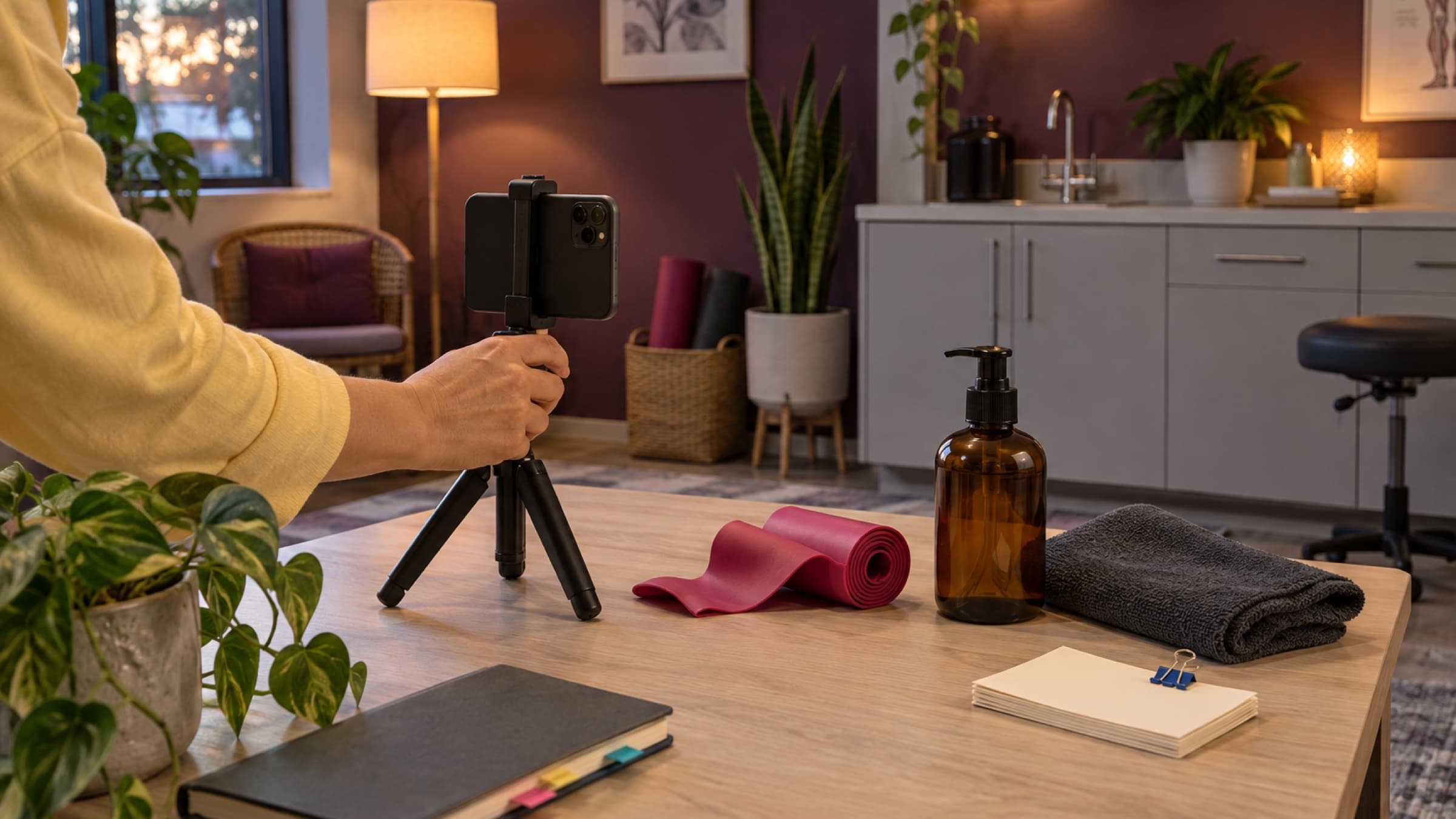
Take pictures in one short round
Once you know the three topics, gather the images together. This is faster than interrupting three different days to create one post at a time.
Use what makes the topic specific:
- the doorway clients should use;
- the mat, bolster, or equipment used in a class;
- an empty treatment room prepared for the next appointment;
- the object that helps explain a service; or
- a natural team moment, with permission from everyone shown.
Look around the whole frame before you take the picture. Remove appointment lists, client names, intake forms, computer screens, labels, photographs, and anything else that could reveal private information. Reflections in mirrors and windows deserve a second look too.
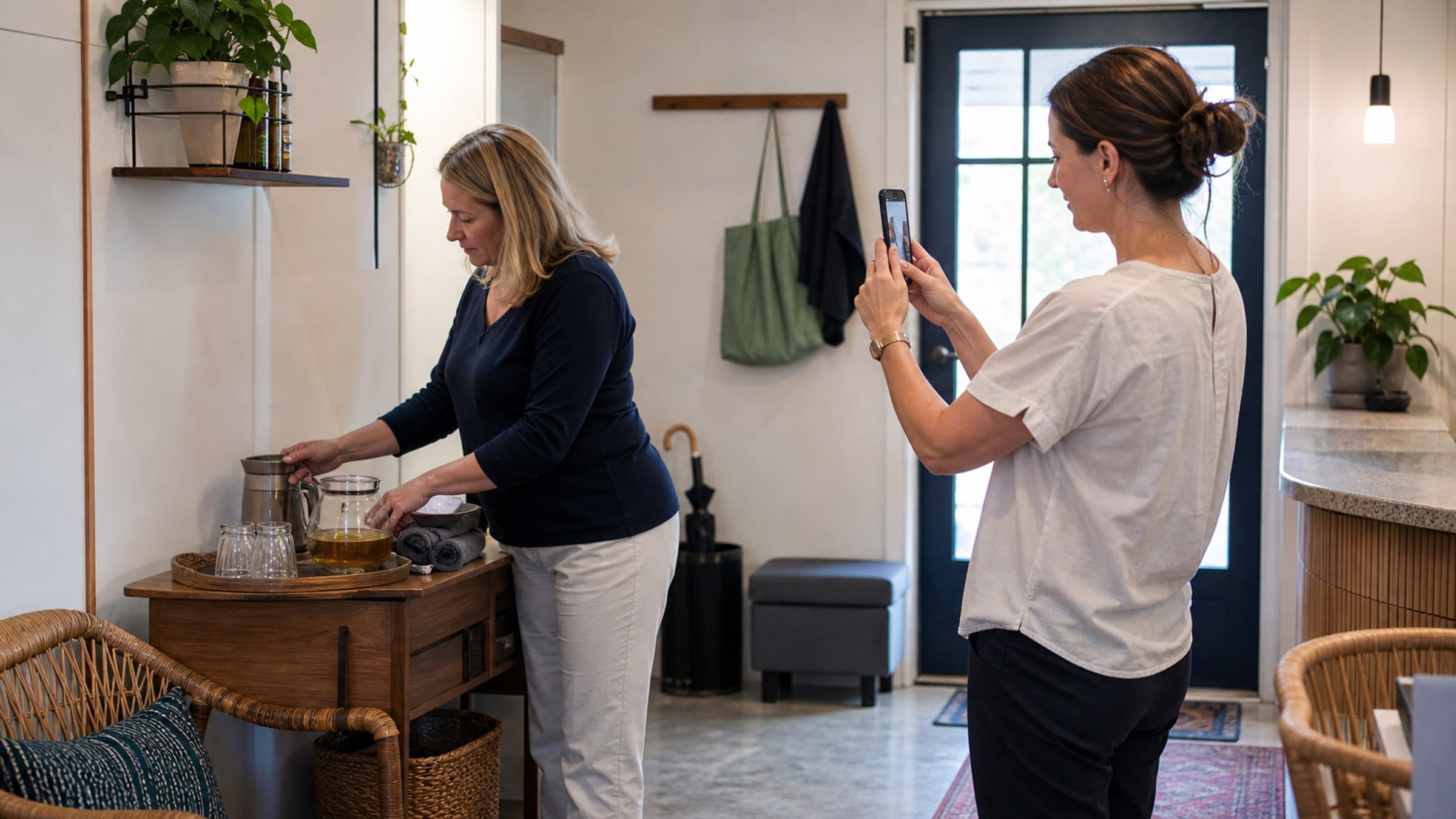
You do not need to make the practice look unused. A coat on a hook, a cup near the staff desk, or a basket of clean equipment can make the space feel real. Keep the details intentional, clean, and relevant to the story.
If the photo includes a person, give them something natural to do. Adjusting a cushion, opening the studio door, or setting out supplies will usually feel more believable than facing the camera with a fixed smile.
Protect the trust behind the post
Before scheduling anything, review it as if you were the client who inspired the idea.
Could they recognize themselves from the timing, the unusual question, the service, or the details around the story? Removing a name is not always enough. Combine recurring questions into a general answer and leave out the personal circumstances that made one conversation memorable.
Also check what the caption promises. Avoid implying that a service guarantees a health result. Keep clinical guidance within your scope and governing rules. If a post mentions price, availability, a class date, or a booking policy, confirm that the current information matches the place where clients will land.
This final review should be quick, but it should be deliberate. A useful post does not need private detail or an exaggerated claim to feel specific.
Schedule a stopping point
Choose the days and times, preview the three posts, and schedule them. Then stop.
Without a stopping point, a twenty-minute routine can become an hour of changing line breaks, trying alternate photos, and searching for one more idea. Your goal is not to produce the definitive version of the practice. It is to share three accurate, useful glimpses of the work.
Leave yourself a short note for next week. Record which topic felt easy, which photo was awkward to get, and which post prompted a useful question or booking. You are looking for patterns you can repeat, not a verdict on every like or view.
After a few weeks, you may notice that practical answers consistently create better conversations than general encouragement, or that real room details help new clients feel more prepared. Let those observations shape the next three posts.
Keep the system smaller than the work
Your practice already gives you material. The planning routine only needs to catch it, shape it, and give it a time to go out.
Three posts are enough to build consistency without making the week revolve around content. Start with help, show, and invite. Use one clear sentence for each. Take the photos in one round, check privacy and accuracy, schedule the set, and return to the work the posts are meant to support.
If you want those drafts and schedules in the same place, Stillpoint Social keeps Instagram and Facebook posts in one queue. Clio can draft from practice sources you allow, including services, classes, open days, and articles, while you keep approval of the words and choose when anything is published.